



Your Guide to Reliable and Affordable Heating in Big Bear Lake
When winter hits Big Bear Lake, affordable heating service in big bear lake ca becomes more than just a convenience—it’s essential for safety and comfort. At 6,752 feet elevation, temperatures regularly drop below freezing, and average snowfall reaches 72 inches annually. Your heating system works harder here than in lower elevations, which means it needs expert care to run efficiently without breaking the bank.
Quick Answer: Finding Affordable Heating Service in Big Bear Lake
- Schedule annual maintenance to prevent costly emergency repairs and improve efficiency
- Look for licensed local providers who understand high-altitude heating challenges
- Catch problems early by watching for warning signs like strange noises or uneven heating
- Explore assistance programs like HEAP, which offers up to $600 for propane or $323 for gas/electric
- Consider system age – most furnaces last 15-30 years before replacement becomes more economical than repairs
For expert guidance on all your climate control needs, explore our complete HVAC services, and when you’re ready for professional help, contact our trusted team.
Mountain living brings unique heating challenges. The good news? The right maintenance approach and a trustworthy local partner can keep your home warm all winter without the sticker shock. Regular tune-ups can extend your system’s life by up to 5 years and cut your heating bills significantly—one Big Bear homeowner saved over $600 monthly after upgrading from an aging furnace.
This guide walks you through everything you need to know about keeping your heating system running efficiently in Big Bear’s demanding climate, from recognizing early warning signs to understanding which systems perform best at altitude.
Recognizing the Signs: When Your Heater Needs Professional Attention
Your heating system is the unsung hero of mountain living, working around the clock to keep your family warm when temperatures plunge. But even the most reliable systems eventually start showing their age or developing problems. The key to maintaining an affordable heating service in Big Bear Lake CA is catching these issues before they turn into expensive emergencies—or worse, leave you shivering during a winter storm.
Think of your heating system like your car. It’ll give you warning signs before it breaks down completely. Uneven heating throughout your home is one of the first red flags. If your living room feels like the tropics while your bedroom is an icebox, something’s not right. This usually points to ductwork issues, a thermostat that’s lost its way, or a system that’s struggling to distribute heat properly. Beyond the discomfort, it means your heater is working overtime and burning through energy.
Strange noises are another clear signal that professional attention is needed. Your heating system should hum along quietly in the background. When you start hearing bangs, squeals, rattles, or grinding sounds, that’s your heater crying for help. These noises often mean mechanical parts are failing—maybe a motor wearing out, components coming loose, or the blower fan struggling.
Have you noticed your energy bills creeping up without explanation? When your heating costs spike but your usage and the weather haven’t changed much, your system is likely losing efficiency. It’s working harder to produce the same amount of heat, and you’re paying the price. This is especially common in Big Bear’s demanding climate, where systems already work harder than their low-altitude counterparts.
Frequent cycling—when your furnace turns on and off repeatedly in short bursts—puts tremendous strain on your system and shortages its lifespan. This “short cycling” might seem minor, but it’s often caused by serious issues like a clogged filter, an oversized unit, or thermostat problems that need addressing.
Pay attention to your air quality too. If you’re suddenly dealing with excessive dust, stale odors, or a burning smell when the heat kicks on, don’t ignore it. A burning smell especially deserves immediate attention—it could be harmless dust burning off heating elements, or it could signal an electrical problem. Our guide on Why Is There a Burning Smell When I Turn On the Heat can help you understand what’s happening.
For gas furnace owners, pilot light issues are worth watching. If your pilot light keeps going out or burns yellow or orange instead of blue, you’ve got a problem with your gas supply or a dirty pilot assembly that needs cleaning.
And of course, if your system simply refuses to turn on, you know something’s wrong. This could be as simple as a tripped circuit breaker or as complex as a failed internal component.
The good news? Catching these warning signs early means simpler, less expensive fixes. Waiting until your system dies completely on the coldest night of the year? That’s when affordable heating service becomes emergency heating service—and nobody wants that. For a comprehensive look at what to watch for, check out What are the Signs of a Furnace Going Out.
Common Heating Problems in High-Altitude Homes
Big Bear’s elevation creates challenges that homes down the mountain never face. At 6,752 feet, the thinner air and extreme cold push heating systems to their limits, making certain problems more common and more severe.
Pilot light issues become trickier at altitude. The changes in air pressure can affect how your gas furnace’s pilot light burns and how the gas-to-air mixture behaves. You might notice it flickering more often or going out when it never did before—that’s the mountain environment at work.
Clogged filters are a universal problem, but they happen faster up here. Between the constant heating demands and the dust that comes with mountain living, your filters work overtime. When they get clogged, airflow drops, and your system struggles to push heat through your home. It’s like trying to breathe through a pillow—exhausting and inefficient.
Thermostat malfunctions can drive you crazy with inconsistent temperatures and unpredictable cycling. Whether you have a basic model or a fancy smart thermostat, these control centers can develop issues that prevent your system from responding properly. When your thermostat goes rogue, your comfort goes with it.
Blower motor failure is particularly problematic because this component is responsible for moving warm air throughout your entire home. When it starts failing, you’ll notice weak airflow, strange sounds, or sometimes no heat distribution at all—even though your furnace is running. For help keeping this critical component healthy, our article on Enhance Heating Efficiency Expert Blower Motor Repair Tips offers practical guidance.
Beyond pilot lights, other ignition problems can prevent your furnace from starting at all. Modern systems have electronic ignition components that can fail, leaving you without heat until they’re repaired or replaced.
The furnace short cycling we mentioned earlier deserves special attention because it has so many potential causes—from an improperly sized unit to a dirty flame sensor or a faulty limit switch. If your furnace’s high limit switch keeps shutting things down, our guide on Furnace High Limit Switch Keeps Tripping Causes and Fixes walks you through what’s happening and why.
Here’s the encouraging part: most of these issues are either preventable with regular maintenance or fixable before they become major problems. Understanding What is the Most Common Problem with Furnaces helps you stay one step ahead of trouble.
Deciding Between Repair and Replacement
When your heating system acts up, you face a decision that affects both your wallet and your comfort for years to come: should you repair it or replace it? It’s not always an easy call, and we understand that finding an affordable heating service in Big Bear Lake CA sometimes means looking beyond the immediate fix to the bigger picture.
System age is the first consideration. Most furnaces last between 15 and 30 years, depending on the model and how well they’ve been maintained. Air conditioning units typically run 15 to 20 years. If your furnace is pushing past the 15-year mark and repairs are becoming a regular occurrence, replacement starts making more financial sense. Think of it this way: you wouldn’t keep pouring money into a car that breaks down every other month.
Repair frequency and cost tell an important story. Are you calling for service every winter? Is this repair going to cost more than half the price of a new system? When repair bills start adding up or you’re facing multiple expensive fixes, investing in a new, reliable unit often saves money in the long run. One Big Bear homeowner we worked with was spending a fortune on repairs before finally upgrading—and then saved over $600 monthly on heating bills with the new, efficient system.
Energy efficiency matters more than many homeowners realize. Older heating systems are energy hogs compared to modern models, and they get worse as they age. If your energy bills keep climbing despite consistent usage, your aging system is working harder and costing you more every single month. Modern systems can cut your heating costs dramatically, sometimes paying for themselves in just a few years through energy savings alone.
Don’t underestimate comfort and reliability either. Living with a system that’s constantly breaking down or leaving cold spots throughout your home takes a toll. There’s real value in knowing your heater will work when you need it most—like during a February cold snap when temperatures drop below zero. Peace of mind matters, especially in Big Bear’s unforgiving winters.
We believe in honest conversations about repair versus replacement. Our team will give you a straightforward assessment of your system’s condition and help you understand your options without pressure or sales tactics. Sometimes repair is absolutely the right choice. Other times, replacement is the smarter investment. For detailed guidance on making this decision, explore our resource on Repairing vs Replacing Your Homes Heating System. While it focuses on air conditioning, How Do You Know When Its Time to Replace Your Air Conditioner offers valuable insights that apply to heating systems too.
The Key to an Affordable Heating Service in Big Bear Lake CA: Proactive Maintenance
Here’s something most Big Bear homeowners learn the hard way: the secret to an affordable heating service in Big Bear Lake CA isn’t finding the cheapest repair when something breaks. It’s preventing those expensive breakdowns in the first place.
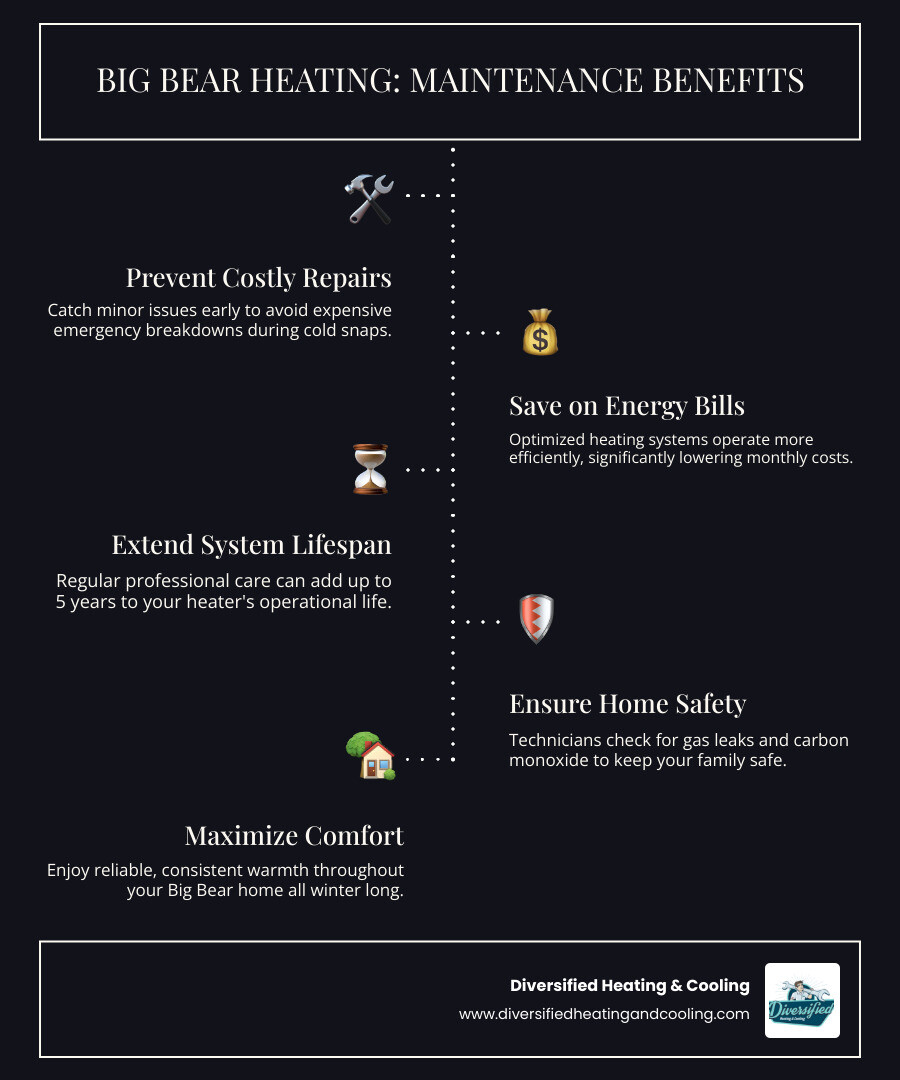
Think of your heating system like your car. You wouldn’t skip oil changes and expect your engine to run smoothly for years, right? The same principle applies to your furnace or heat pump. Regular maintenance keeps everything running efficiently, catches small problems before they become big ones, and ultimately saves you money.
Energy efficiency is where you’ll notice the biggest impact. A well-maintained heating system doesn’t have to work as hard to keep your home warm. Clean filters, properly calibrated thermostats, and well-lubricated moving parts all add up to lower monthly utility bills. When your system is running at peak performance, you’re not throwing money out the window—or up the chimney.
There’s also the matter of system longevity. With proper care, regular tune-ups can extend your heating system’s life by up to 5 years. That’s five extra winters before you need to think about replacement costs. In a climate as demanding as Big Bear’s, where your heater runs hard for months on end, that extended lifespan represents serious savings.
Safety checks are another critical piece of the maintenance puzzle. Gas furnaces, while reliable, can develop gas leaks or carbon monoxide issues if not properly maintained. A professional technician inspects these safety components during every tune-up, giving you peace of mind that your family is protected. Our team specializes in Ensuring Heating System Safety Expert Combustion Analysis to catch potential hazards before they become emergencies.
When your system receives regular attention, you’ll enjoy improved performance throughout the winter. No more cold spots in certain rooms. No more strange noises in the middle of the night. Just consistent, reliable warmth exactly when you need it.
Perhaps most importantly, maintenance helps you avoid those dreaded emergency repair calls. Many major heating failures start as minor issues—a worn belt here, a dirty sensor there. During a maintenance visit, technicians spot and fix these small problems before they cascade into expensive breakdowns. This proactive approach is the foundation of truly affordable heating service in Big Bear Lake CA.
We recommend scheduling your annual maintenance in early fall, before the temperature really drops. That way, your system is ready to handle whatever winter throws at it. For helpful tips you can tackle yourself between professional visits, check out our 6 Furnace Maintenance Tips to Make Your Winter Warm Cozy.
Preparing Your Heating System for Winter
As summer fades and autumn brings cooler mountain air, it’s time to think about winter preparation. Getting your heating system ready before the first hard freeze isn’t just smart—it’s essential for avoiding those middle-of-the-night emergencies when temperatures plummet.
Start with the simplest task: check and replace your air filters. This is hands-down the most effective thing you can do yourself. A dirty filter chokes your system, making it work harder and consume more energy. We recommend checking your filter monthly during heating season and replacing it every one to three months, depending on your home’s conditions. If you have pets or someone with allergies, you might need to change it even more frequently.
Next, walk through your home and inspect all vents and registers. Make sure furniture, curtains, or area rugs aren’t blocking them. Blocked vents create pressure imbalances in your system and lead to uneven heating—plus they make your furnace work unnecessarily hard.
Test your thermostat before you really need it. Turn the heat up a few degrees and listen for your system to kick on. If you have a programmable or smart thermostat, now’s the time to adjust your winter schedule. A properly functioning thermostat is crucial for maintaining comfort and efficiency.
If you have a heat pump or another system with outdoor components, take a few minutes to clear the area around your outdoor unit. Remove fallen leaves, pine needles, snow, and any other debris. Your system needs good airflow to operate efficiently, especially in Big Bear’s snowy conditions.
Don’t forget about protecting pipes from freezing. In our mountain climate, exposed pipes in basements, crawl spaces, and attics need insulation. Burst pipes can cause thousands of dollars in damage and leave you without heat when you need it most.
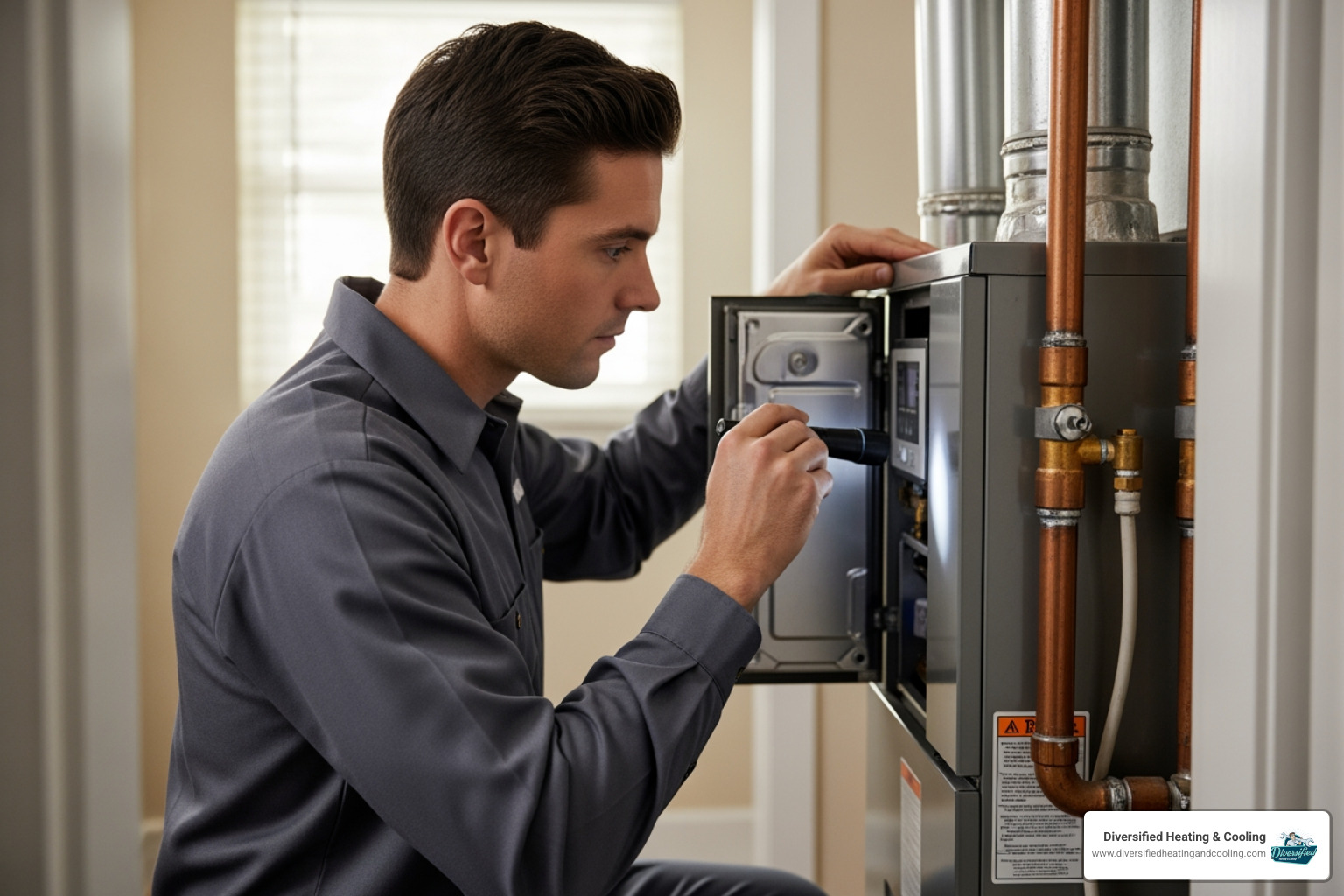
While these DIY tasks are important, they’re no substitute for a professional tune-up. Our technicians have specialized tools and training to thoroughly inspect, clean, and calibrate your entire system. We check things homeowners can’t easily access—like heat exchangers, burners, and electrical connections. This comprehensive approach catches potential problems before they interrupt your comfort or drain your wallet.
For more detailed guidance on winter preparation, explore our Heating Service Tips to Help You Prepare for Winter and Preparing Furnace for Fall. Taking these steps now means you’ll spend winter enjoying your warm home instead of waiting for emergency repairs.
Common Heating Systems in Big Bear and Their Needs
Not all heating systems are created equal, especially at 6,752 feet elevation. Understanding what type of system you have—and what it needs to perform well in Big Bear’s demanding climate—helps you make informed decisions about maintenance and upgrades.
Gas furnaces are the workhorses of mountain heating. They’re reliable, powerful, and handle extreme cold without breaking a sweat. These systems burn natural gas or propane to generate heat, then distribute it through your home’s ductwork. They need annual maintenance that includes cleaning burners, checking the heat exchanger for cracks, testing safety controls, and ensuring proper combustion. The good news? When properly maintained, gas furnaces are incredibly durable and efficient in cold climates.
Electric heat pumps work differently—they transfer heat rather than generating it. In milder climates, they’re wonderfully efficient. However, at Big Bear’s elevation and temperatures, traditional heat pumps can struggle when the mercury drops below freezing. They require more frequent filter changes and benefit from supplemental heating during the coldest weeks. If you’re interested in this technology, our Heat Pumps Services Yucca Valley CA page offers insights into modern heat pump options.
Ductless mini-split systems are gaining popularity in mountain homes, especially for additions or rooms that are hard to heat. These systems use an outdoor compressor connected to one or more indoor air handlers. They’re efficient, quiet, and offer zone control—meaning you can heat different rooms to different temperatures. In Big Bear’s climate, they work best as supplemental heating or in well-insulated newer homes. Maintenance includes cleaning filters monthly and having the outdoor unit serviced annually. Learn more about these versatile systems at Mitsubishi Ductless HVAC Yucca Valley CA.
Here’s a quick comparison of how these systems stack up for Big Bear conditions:
| System Type | Best For | Maintenance Needs | Cold Climate Performance |
|---|---|---|---|
| Gas Furnaces | Primary heating in extreme cold | Annual professional service, monthly filter changes | Excellent – most reliable in sub-freezing temperatures |
| Heat Pumps | Milder climates or supplemental heating | Annual service, frequent filter changes, outdoor unit care | Good with backup heat – efficiency drops below 32°F |
| Ductless Mini-Splits | Zone heating, additions, well-insulated homes | Monthly filter cleaning, annual professional service | Good – best as supplemental or in newer, tight homes |
The key to an affordable heating service in Big Bear Lake CA is matching your system type to your home’s needs and keeping up with the right maintenance schedule. Each system has its strengths, and with proper care, any of them can keep you comfortable through Big Bear’s long winters.