



Why Desert Heat Pumps Need Expert Care in Landers
Heat pump repair in landers ca is essential for maintaining year-round comfort in the challenging desert climate of the Morongo Basin. If your heat pump is making strange noises, struggling to maintain consistent temperatures, or driving up your energy bills, you’re experiencing common issues that require professional attention. Desert conditions put unique stress on heat pump systems, from extreme temperature swings to airborne dust and sand that can compromise performance. Getting prompt, expert repair service helps you avoid complete system failure and keeps your home comfortable through scorching summers and chilly winter nights.
Quick answers for heat pump owners in Landers:
- Local HVAC professionals understand desert climate challenges and can diagnose issues faster
- Common repair signs include unusual noises, short cycling, poor airflow, and rising energy costs
- Regular maintenance extends your system’s lifespan and prevents costly emergency repairs
- Licensed technicians ensure repairs meet local codes and manufacturer standards
For comprehensive HVAC services throughout the High Desert, explore our full range of heating and cooling solutions, or contact Diversified Heating & Cooling today for expert heat pump repair.
Heat pumps offer a practical solution for Landers homeowners because they provide both heating and cooling from a single unit, making them ideal for our extreme temperature variations. Understanding when your system needs professional help and how to maintain it properly ensures reliable comfort without unnecessary expense.

Common Signs Your Heat Pump Needs Professional Attention
Your heat pump has a way of telling you when something’s wrong—you just need to know what to listen for. Living in Landers, where your system battles extreme heat and desert dust year-round, catching these warning signs early can save you from an uncomfortable breakdown and a hefty repair bill.
Unusual noises are usually the first thing homeowners notice. Your heat pump will make some normal operational sounds, but grinding, hissing, or loud rattling? That’s your system calling for help. A high-pitched squeal often means a worn belt, while clanking sounds suggest something’s come loose inside the unit. These aren’t just annoying background noise—they’re telling you something mechanical needs attention before it fails completely.
When your home feels like a patchwork quilt of temperatures, with some rooms freezing while others stay stuffy, you’re dealing with inconsistent temperatures. This frustrating problem often points to low refrigerant levels, a thermostat that’s lost its way, or a compressor that’s struggling to keep up. If your heat pump runs constantly but never quite reaches the temperature you’ve set, it’s working overtime without getting results.
Short cycling is what we call it when your heat pump keeps turning on and off like a light switch. Instead of running through complete heating or cooling cycles, it starts and stops repeatedly, burning through energy and wearing down components. This jerky operation can stem from a clogged filter, an improperly sized unit, or electrical gremlins hiding in your system.
A sudden spike in your energy bills without any change in your usage habits is another red flag. When your heat pump has to work harder because something’s wrong, it gulps down electricity trying to maintain your comfort. That inefficiency shows up directly on your utility statement.
Finally, poor airflow from your vents—or barely any air movement at all—means your system can’t circulate conditioned air through your home. The culprit might be something simple like a blocked filter, or something more serious like duct leaks or a failing fan motor.
The desert climate in Landers doesn’t give struggling heat pumps any mercy. When you spot these warning signs, reaching out for heat pump repair in Landers CA quickly prevents small issues from snowballing into complete system failures. For more detailed information about recognizing these problems, check out our guide on signs your heat pump needs professional attention.
Landers Climate Challenges: Why Your Heat Pump Works Harder
Living in Landers means you get to enjoy stunning desert sunsets and wide-open skies, but it also means your heat pump faces some of the toughest working conditions around. The High Desert climate is beautiful but unforgiving, and understanding how it affects your system helps explain why heat pump repair in Landers CA is such an important service.
Let’s start with the obvious challenge: desert heat stress. When summer arrives in Landers, it doesn’t mess around. Temperatures regularly climb past 100°F, and your heat pump is working overtime to keep your home cool. Unlike air conditioners in milder climates that get occasional breaks, your system is constantly extracting heat from inside your home and pushing it into air that’s already scorching hot outside. This relentless operation puts tremendous strain on the compressor and other vital components, causing them to wear out faster than they would in more moderate environments.
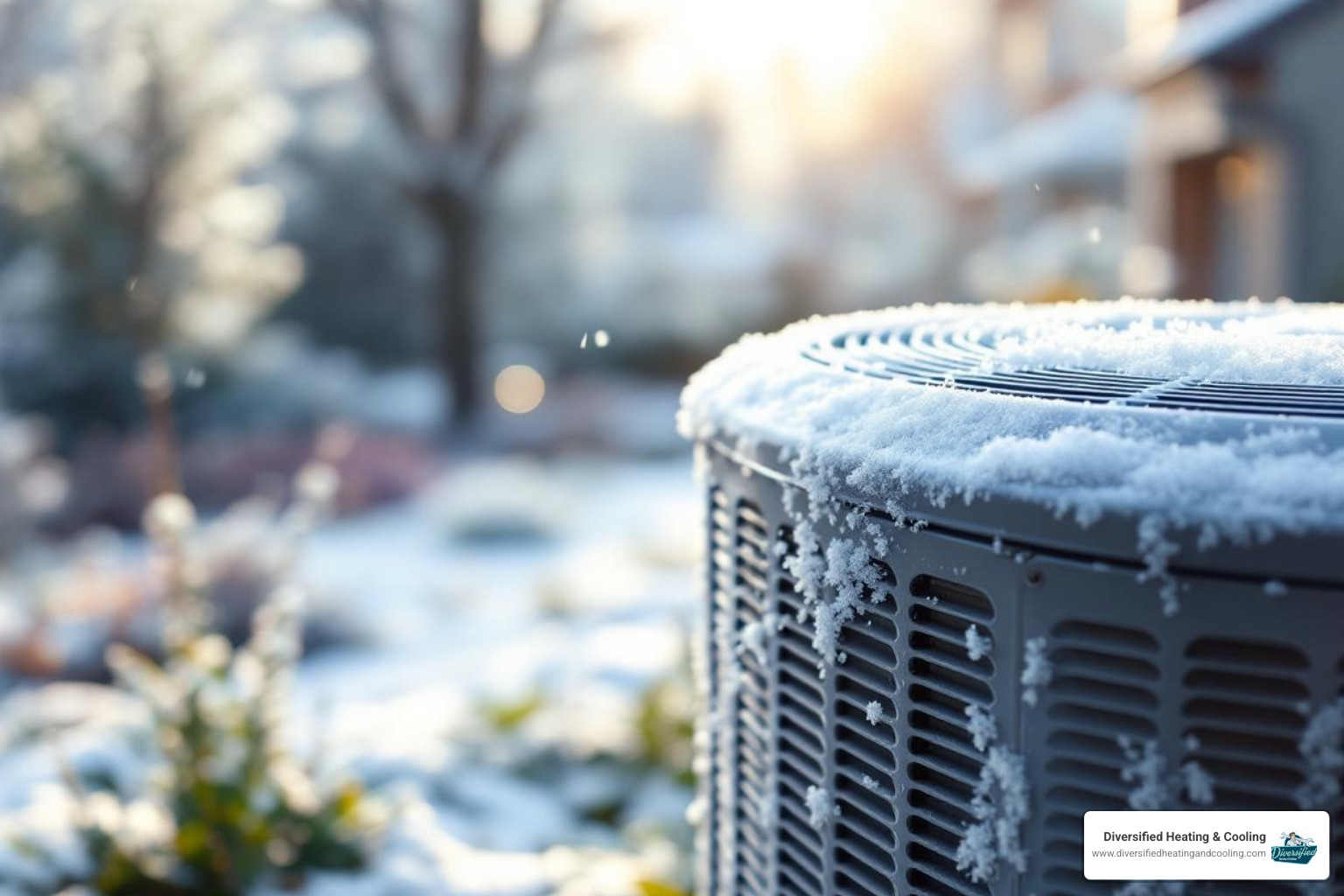
But here’s what surprises many desert newcomers: our winters can be genuinely cold. Those clear desert nights allow heat to escape quickly, and temperatures can drop well below 40°F. Heat pumps are efficient cooling and heating machines, but they start losing efficiency when temperatures fall into the low 40s, and they really struggle when it gets closer to 25°F. During these cold snaps, your system has to work much harder, often relying on backup heating elements that consume more energy and add stress to the entire system.
Then there’s the airborne dust and sand that’s just part of desert life. These fine particles are constantly floating through the air, and they love to settle on and inside your outdoor unit. When dust coats the coils, they can’t transfer heat efficiently. When it clogs filters, airflow gets restricted. When it infiltrates moving parts, motors have to work harder and components wear down faster. It’s like asking someone to run a marathon while breathing through a dirty cloth—everything becomes more difficult.
All this extreme weather and dust creates compressor strain. The compressor is essentially the heart of your heat pump, and it’s responsible for moving refrigerant through the system to make heating and cooling happen. Constant operation in extreme heat, frequent starts and stops as temperatures fluctuate, and working against reduced efficiency from dust buildup all take their toll. Since the compressor is one of the most critical components, keeping it healthy is essential.
Refrigerant level issues also become more common in our climate. The dramatic temperature swings between day and night, summer and winter, cause seals and connections to expand and contract repeatedly. Over time, this can create tiny leaks that slowly allow refrigerant to escape. When refrigerant levels drop, your heat pump can’t heat or cool effectively, and the compressor has to work even harder to compensate, which can ultimately damage it.
These factors affecting lifespan mean that a heat pump in Landers faces tougher conditions than one in a coastal or temperate area. While a well-maintained heat pump typically lasts around 14 years, and newer high-efficiency models can reach 20 years or more, the harsh desert environment can significantly shorten that lifespan if the system isn’t properly cared for.
That’s why the importance of regular maintenance cannot be overstated here in the High Desert. Routine professional service helps your system handle the unique challenges of our climate. Regular tune-ups catch small problems before they become expensive repairs, keep components clean and efficient, and ensure your heat pump can deliver reliable comfort year-round. For comprehensive support throughout the region, we offer HVAC services in Yucca Valley, CA that address these desert-specific challenges.
Your heat pump works incredibly hard in Landers, and giving it the professional attention it needs helps ensure it keeps working for years to come.
Your Guide to Professional Heat Pump Repair in Landers CA
When your heat pump starts acting up in the middle of a desert summer or during an unexpectedly chilly winter night, you need more than just a quick fix. You need someone who understands exactly what your system is up against in Landers, CA. That’s where professional heat pump repair in Landers CA makes all the difference—it’s about getting your home comfortable again with confidence that the repair will last.
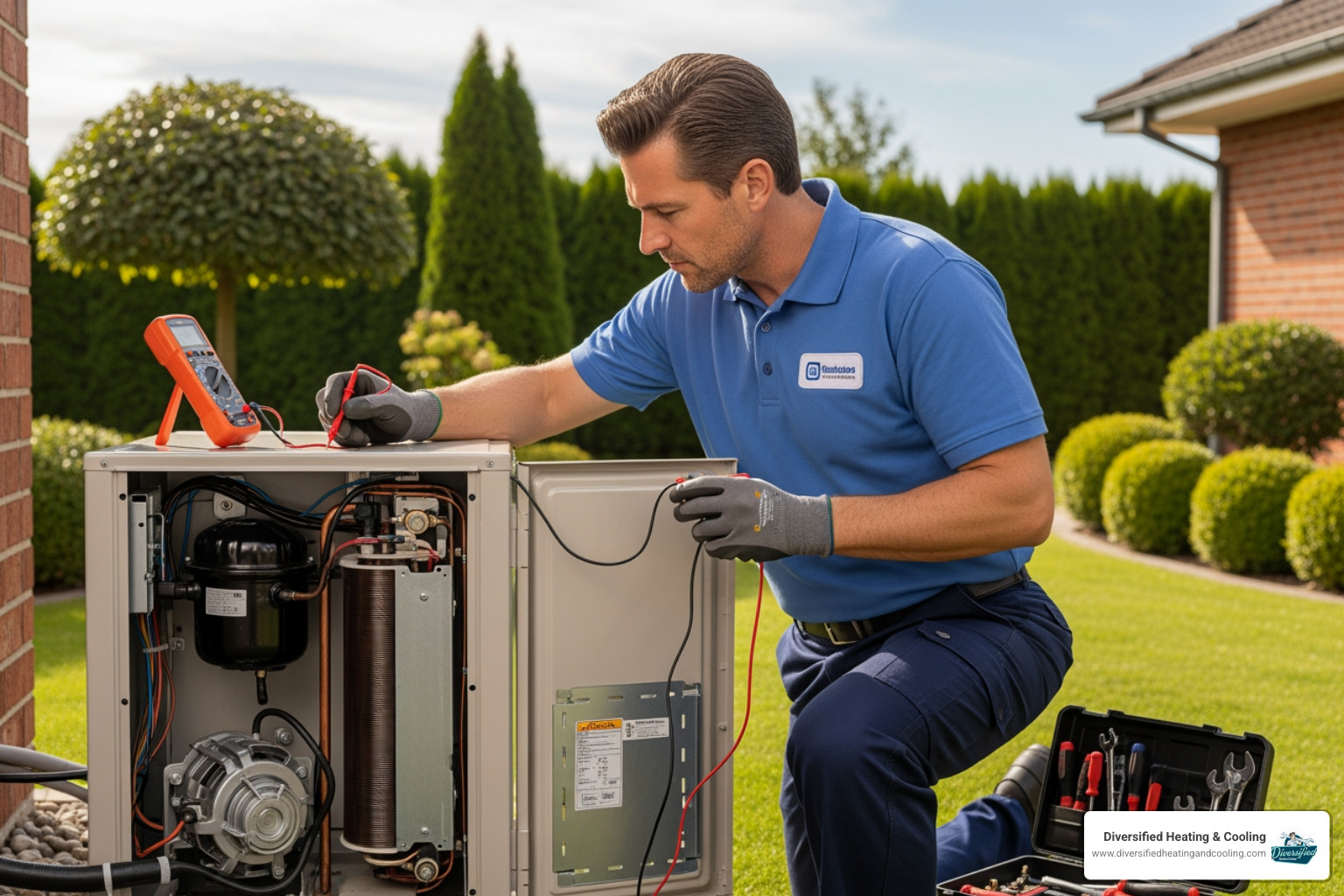
Professional technicians bring something to the table that even the handiest homeowner can’t replicate: specialized training, diagnostic equipment, and years of experience troubleshooting complex HVAC issues. They can pinpoint problems that might seem mysterious—like why your system is freezing up in July or why that strange smell appears every time the unit kicks on. Whether it’s an electrical malfunction, a refrigerant leak, or a failing compressor, they have the tools and knowledge to fix it right the first time.
One thing we’ve learned serving the High Desert community is that when your heat pump fails, timing matters. Local expertise means we can respond quickly when you need us most. We’re not dispatching someone from hours away—we’re your neighbors, and we understand that a broken heat pump in Landers isn’t just an inconvenience; it can be a genuine emergency.
Our community reputation is something we’ve earned through years of honest, reliable service. We’re a family-oriented business, and we treat every home like it’s our own. When your neighbors recommend us, it’s because they know we show up when we say we will, we explain things clearly without technical jargon, and we stand behind our work.
It’s also crucial to work with licensed and insured professionals. This isn’t just about paperwork—it protects you from liability and ensures that every repair meets both industry standards and local building codes. Our technicians stay current with ongoing training, so they’re equipped to handle everything from older heat pump models to the latest high-efficiency systems.
Why Local Expertise is Crucial for Heat Pump Repair in Landers CA
Here’s something we’ve noticed over the years: a technician from a coastal area might look at your heat pump and miss things that are obvious to someone who lives and works in the High Desert. The desert isn’t just hot—it’s a completely different environment that creates unique challenges for HVAC systems.
Our knowledge of the desert climate means we immediately understand what your heat pump is dealing with. We know how the scorching summer heat stresses compressors, how the dramatic temperature swings between day and night affect system performance, and how the ever-present dust and sand infiltrate outdoor units. When we diagnose a problem, we’re not just looking at the immediate symptom—we’re considering how the desert environment contributed to it and how to prevent it from happening again.
We also have a deep understanding of local building codes and regulations specific to our area. This ensures that every repair we make is compliant and safe. You won’t have issues down the road because something wasn’t installed or repaired to code.
Our experience with common regional issues gives us an edge in troubleshooting. We’ve seen how desert dust clogs coils, how extreme heat affects capacitors, and how power fluctuations during summer peak demand can impact electrical components. We don’t need to guess—we’ve fixed these problems hundreds of times before.
We’re also committed to energy efficiency optimization custom to our climate. In the High Desert, where your HVAC system can account for a significant portion of your energy bill, running efficiently isn’t just good for the environment—it’s good for your wallet. We can identify opportunities to improve your system’s performance and reduce unnecessary energy consumption. Our expertise extends throughout the High Desert region, and you can learn more about our comprehensive approach through our HVAC contractors in Palm Springs, CA services.
Deciding Between Repair and Replacement
This is the question we get asked more than almost any other: “Should I repair this heat pump or replace it?” It’s not always an easy answer, and we’ll never pressure you one way or the other. Instead, let’s look at the factors that help make this decision clearer.
The age of your unit is usually the first consideration. If your heat pump is relatively young—say, under seven years old—and this is its first major issue, repair almost always makes sense. On the other hand, if your system is approaching or past the 14-year mark, especially if it’s been struggling for a while, replacement might be the wiser investment.
Repair frequency tells an important story. If we’ve been out to fix your heat pump multiple times in the past couple of years, and now there’s another problem, it might be time to have a serious conversation about replacement. Frequent repairs add up quickly, and at some point, you’re just throwing good money after bad.
System efficiency matters more than many homeowners realize. Older heat pumps simply don’t operate as efficiently as modern units. If your system has a low SEER (Seasonal Energy Efficiency Ratio) or HSPF (Heating Seasonal Performance Factor) rating, you’re paying more every month to heat and cool your home. A new, high-efficiency unit might pay for itself over time through energy savings.
Finally, consider your system’s overall performance. If your heat pump struggles to keep your home comfortable even when it’s working “correctly,” or if some rooms are always too hot or too cold, it might be undersized or simply worn out. Sometimes a repair will get it running again, but it won’t solve underlying performance issues.
| Factor | Repair Often Makes Sense | Replacement Often Makes Sense |
|---|---|---|
| Age of Unit | Under 7-8 years old | Over 14 years old |
| Repair Frequency | First or second major issue | Multiple repairs in recent years |
| System Efficiency (SEER/HSPF) | Modern, high-efficiency ratings | Older, low-efficiency ratings |
| Overall Performance | Generally keeps home comfortable | Struggles to maintain comfort |
We’ll always give you our honest assessment and help you understand the pros and cons of each option. Sometimes the right choice is obvious, and sometimes it’s a judgment call. Either way, we’re here to help you make the decision that’s best for your home and your budget. For more insights on when replacement might be the better option, check out our article on reasons for heat pump replacement.