



Why Reliable Heating Matters in Big Bear Lake’s Mountain Climate
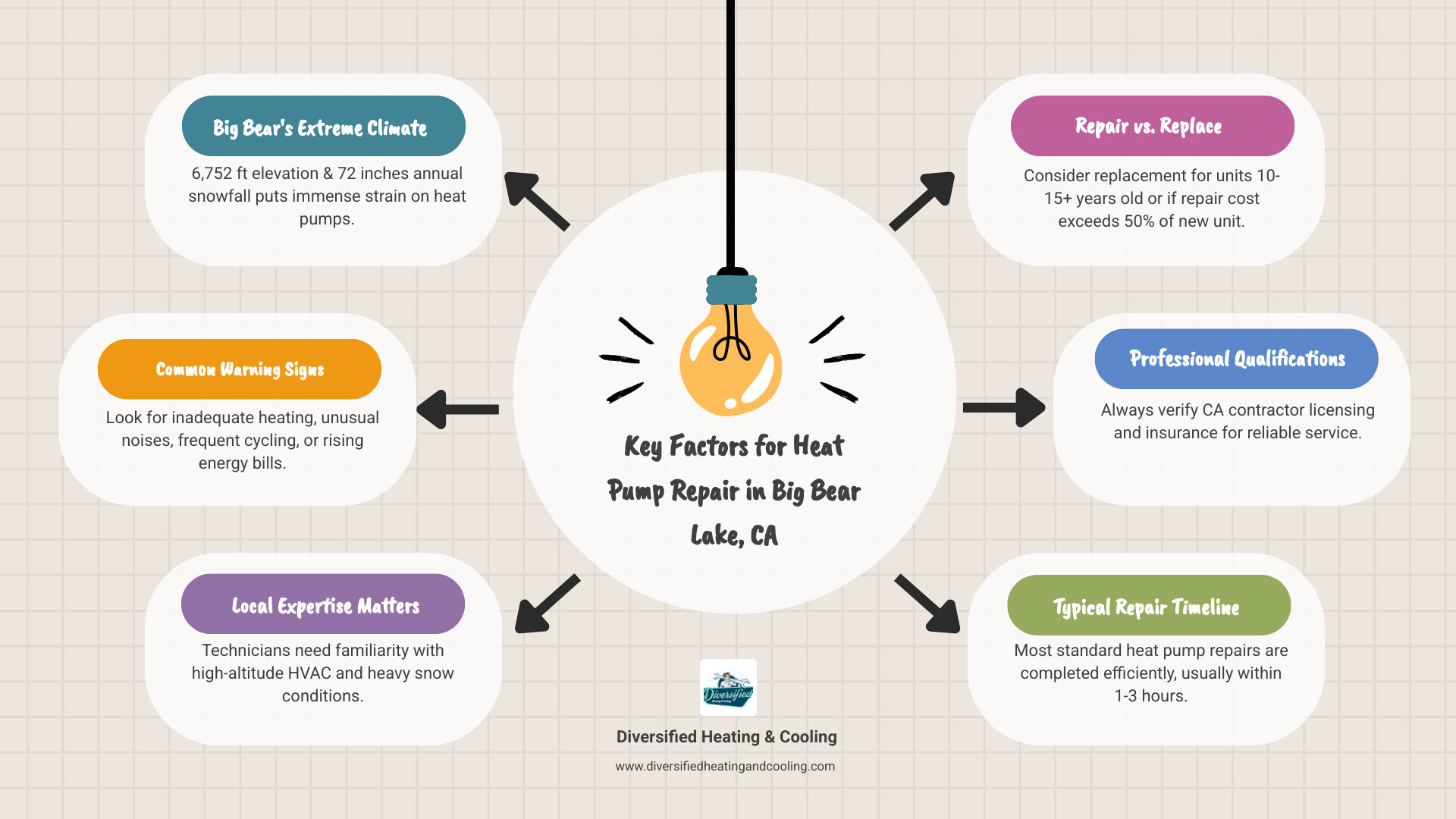
Heat pump repair in big bear lake ca is essential for maintaining comfort year-round in a region where winter temperatures regularly drop below freezing and the average annual snowfall reaches 72 inches. At 6,752 feet elevation, Big Bear Lake presents unique challenges that put extra strain on heating systems, making professional repair services crucial for homeowners.
If you need heat pump repair in Big Bear Lake, CA, here’s what to look for:
- Common warning signs: Unusual noises, inadequate heating, frequent cycling, or rising energy bills
- Local expertise matters: Technicians familiar with high-altitude HVAC performance (6,752 feet) and heavy snow conditions
- Typical repair timeline: Most repairs completed in 1-3 hours
- When to replace instead: Systems over 10-15 years old or when repair costs exceed 50% of replacement value
- Licensed professionals: Verify CA contractor licensing and insurance before hiring
Big Bear Lake’s extreme climate means your heat pump works harder than systems at lower elevations. The combination of heavy snowfall, below-freezing temperatures, and thinner air at high altitude creates conditions where even small issues can quickly escalate into complete system failures. When your heat pump struggles during a winter storm, having access to experienced local technicians who understand mountain climate challenges becomes critical.
Learn more about heat pump services or schedule your repair today.
The Unique Challenges for Heat Pumps in Big Bear Lake’s Climate
When you choose to live in Big Bear Lake, you’re signing up for breathtaking mountain views, fresh alpine air, and a close-knit community. You’re also getting a climate that can be pretty tough on your home’s heating system.
At 6,752 feet above sea level, Big Bear Lake isn’t your average California town. The altitude here changes everything about how your heat pump operates. Add in an average of 72 inches of snow each year and temperatures that regularly drop below freezing, and you’ve got conditions that push heating systems to their limits. This is why heat pump repair in Big Bear Lake CA becomes so critical—your system is working overtime just to keep up with Mother Nature’s demands.
Understanding Altitude’s Effect on HVAC
Here’s something most people don’t realize: the air at 6,752 feet is noticeably thinner than down in the valleys. You’ve probably felt it if you’ve ever gotten winded walking up your driveway after a trip to lower elevations. Your heat pump feels it too.
Heat pumps don’t create warmth like a furnace does—they move heat from one place to another. During winter, your system pulls whatever heat it can find from the outdoor air and brings it inside. But when that outdoor air is thin and sparse, there’s simply less heat available to capture. It’s like trying to scoop water with a slotted spoon.
This altitude challenge creates real problems. Your heat pump’s compressor and other components experience increased stress because they’re working harder and longer to maintain comfortable temperatures inside. Think of it like running a marathon at high altitude versus sea level—everything becomes more demanding.
The reduced heat transfer efficiency means your system might struggle on those bitter cold nights when you need it most. And because heat pumps weren’t originally designed with Big Bear’s specific altitude in mind, many units need professional calibration to perform optimally at this elevation. Without these adjustments, you’re likely paying more in energy bills while getting less comfort in return.
Want to maximize your system’s performance? Check out our tips on how to improve your heat pump’s performance for practical guidance.
Preparing for Winter Weather
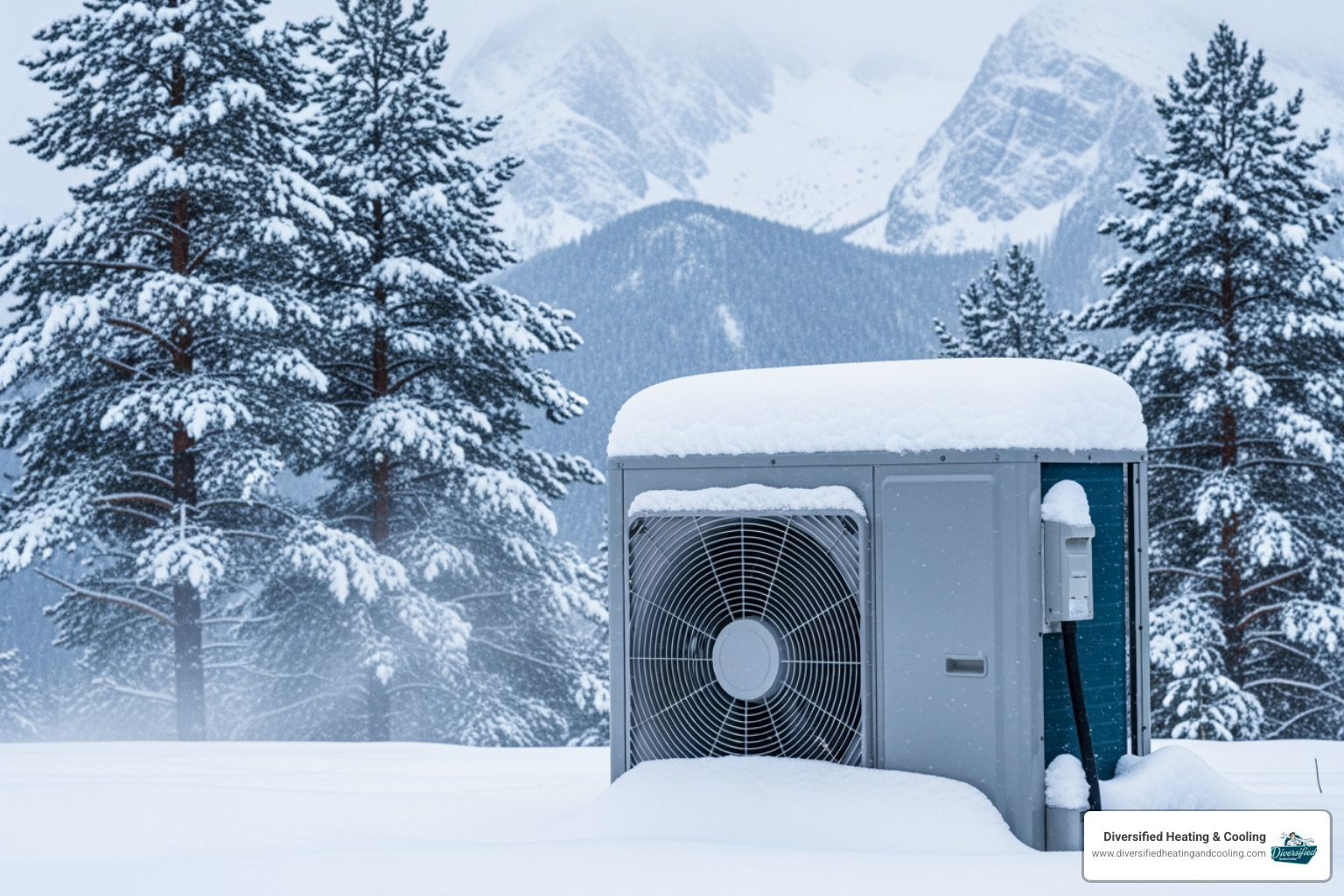
Snow is beautiful when you’re sipping hot cocoa by the fireplace. It’s less beautiful when it’s burying your outdoor heat pump unit under several feet of powder.
With 72 inches of annual snowfall, snow accumulation around your outdoor unit is practically guaranteed. Your heat pump needs to breathe—it pulls in air, exchanges heat, and pushes air back out. When snow blocks this airflow, the system can’t do its job. Even worse, restricted airflow forces your unit to work harder, which leads to overheating, freezing up, or complete breakdowns.
Ice buildup presents another serious risk. When temperatures hover around freezing and snow melts during the day only to refreeze at night, ice can form on the coils and fan blades. This ice acts like an insulating blanket in all the wrong ways, preventing heat transfer and potentially damaging delicate components.
The solution? Make sure your outdoor unit always has at least two feet of proper clearance on all sides. After a snowstorm, grab a broom (nothing sharp that could damage the fins) and gently clear away snow and ice. Take a minute to check the top of the unit too—snow has a way of piling up there.
Some folks ask about protective covers for winter. Here’s the thing: if your heat pump is running, it needs airflow. A cover can do more harm than good. If you do use one, make sure it’s specifically designed for operating heat pumps, not just a generic outdoor equipment cover. Better yet, focus on keeping the area clear rather than covering the unit.
Living at altitude with heavy snowfall means your heat pump faces challenges that systems in the valley never encounter. But with proper understanding and care, your system can handle Big Bear’s demanding climate and keep your home comfortable all year long.
Common Signs Your Big Bear Heat Pump Needs Professional Repair
Even the most reliable heat pumps eventually need attention, especially when they’re working overtime in Big Bear Lake’s demanding mountain climate. The good news? Your system usually gives you plenty of warning before it completely gives up on you. Learning to recognize these early signals can save you from a midnight breakdown during a snowstorm—and from much larger repair bills.

The most obvious sign is inadequate heating or cooling. If you’re cranking the thermostat higher and higher but your home stays stubbornly cold, something’s wrong. Maybe you notice certain rooms that never seem to warm up, or the whole house feels chilly despite the system running constantly. This could point to low refrigerant levels, a struggling compressor, or blocked airflow somewhere in your system.
Another telltale sign is when your energy bills suddenly spike without explanation. You haven’t changed your habits, but your electricity bill looks like it belongs to someone else’s house. When a heat pump loses efficiency, it compensates by running longer and working harder to reach your target temperature. That extra effort shows up on your monthly statement, and it’s your system’s way of telling you it needs professional help.
Watch for frequent cycling too. Your heat pump should run in steady, predictable cycles. If it’s turning on and off repeatedly—what HVAC professionals call “short cycling”—that’s a problem. This exhausting pattern puts tremendous stress on your system and often signals issues like an incorrectly sized unit, a clogged filter, or a refrigerant leak. For more details on these warning signs, check out our guide on when your heat pump needs professional attention.
Unusual Noises and Odors
Your heat pump should operate relatively quietly in the background. When it starts making a racket or filling your home with strange smells, it’s definitely trying to tell you something.
Grinding sounds usually mean the motor bearings are wearing out, either in your indoor or outdoor unit. This isn’t something that fixes itself—those bearings will continue deteriorating until the motor fails completely. Squealing or screeching typically points to a worn fan belt or bearing problems. These high-pitched sounds are hard to ignore, and you shouldn’t try to.
On the smell side, musty odors often indicate mold or mildew growing inside your ductwork or on your indoor coil. This happens when moisture accumulates and doesn’t drain properly. Beyond being unpleasant, it affects your indoor air quality and can aggravate allergies.
Burning smells are the most serious. If you detect something like burning plastic or electrical wires, shut down your system immediately and call for help. This could mean overheating components or damaged wiring—both serious fire hazards that need immediate professional attention.
Recognizing a Failing Compressor
The compressor is essentially your heat pump’s heart. It circulates refrigerant and moves heat where it needs to go. When it starts failing, your entire system suffers, and you’re looking at one of the more significant repair situations you might face with your heat pump repair in Big Bear Lake CA.
Loud startup noises are often the first clue. A healthy compressor starts smoothly and quietly. If yours sounds like it’s struggling—grinding, clanking, or making labored sounds when it kicks on—the compressor might be seizing up.
Tripped circuit breakers that keep happening are another red flag. A failing compressor draws excessive electrical current, triggering your breaker as a safety measure. If you find yourself repeatedly resetting the breaker for your heat pump, the compressor is likely overworking or developing an electrical short.
You might also notice reduced airflow or find your system isn’t heating or cooling at all. Without a functioning compressor, refrigerant can’t circulate, which means your heat pump can’t transfer heat effectively. You’ll get weak airflow from your vents, or air that’s barely conditioned.
In the worst cases, the system won’t start at all. A completely failed compressor leaves your heat pump unable to operate, which is particularly problematic during Big Bear’s coldest months.
If you’re experiencing any of these compressor-related symptoms, it’s time to consult with experienced technicians who understand mountain climate challenges. Our HVAC troubleshooter can help you identify common problems and determine your next steps.
Your Guide to Heat Pump Repair in Big Bear Lake CA
When your heat pump starts acting up in Big Bear Lake’s demanding climate, getting timely and effective repair isn’t just about comfort—it’s about keeping your home safe and livable through harsh mountain winters. Understanding what affects your system’s lifespan, how energy efficiency changes over time, and what to expect from repairs can help you make smart decisions when problems arise.
Most heat pumps have a system lifespan of 10 to 15 years, but that number isn’t set in stone. Here in Big Bear, where your system works harder due to altitude and extreme temperatures, you might see that lifespan on the shorter end without proper care. As your heat pump ages, its energy efficiency naturally declines—you might notice your utility bills creeping up even though you haven’t changed how you use your system.
Repair frequency tends to increase as units age, which makes sense when you think about it. All those years of cycling on and off, battling heavy snow and below-freezing temperatures, take their toll. A well-maintained heat pump might need only minor repairs every few years when it’s young, but an older system could require attention multiple times annually.
That’s where regular maintenance becomes your best friend. Professional tune-ups can extend your system’s life, maintain efficiency, and catch small problems before they become expensive emergencies. We’re here to provide comprehensive heat pump services that keep your Big Bear home comfortable year-round.
When to Repair vs. Replace Your System
This is the question we hear most often when homeowners face a significant repair: “Should I fix it or replace it?” It’s not always an easy answer, but there are some helpful guidelines.
Age matters a lot. If your heat pump is pushing past that 10-15 year mark, a major repair might be throwing good money after bad. Think of it like an older car—at some point, you stop putting money into repairs and start shopping for a newer, more reliable model.
The 50% rule concept is another helpful benchmark. If the repair approaches or exceeds 50% of what a new system would cost, replacement usually makes more financial sense. This is especially true when you consider that a new heat pump will come with warranties, better efficiency, and years of reliable service ahead.
SEER rating decline is something many homeowners don’t think about, but it matters for your wallet. That old heat pump might have a SEER rating of 10 or 12, while modern high-efficiency models can reach 18, 20, or even higher. The difference in your monthly energy bills can be substantial, especially when your system runs as much as it does in Big Bear’s climate.
We’ll always give you an honest assessment of your system’s condition. Sometimes a repair makes perfect sense—your unit is relatively young, the fix is minor, and you’ll get years more service. Other times, replacement is the smarter move. We help you understand the full picture so you can make the best decision for your home and budget. For more details on this important choice, check out our guide on the reason for heat pump replacement.
Common Heat Pump Systems in Mountain Homes
Not all heat pumps are created equal, and Big Bear Lake residents typically rely on specific types that handle our unique climate challenges best.
Air-source heat pumps are the workhorses you see most often in mountain homes. These systems transfer heat between your indoor space and the outside air, and modern cold-climate models have come a long way. They can work effectively even when temperatures drop significantly, though many Big Bear homeowners pair them with a backup heat source for those really frigid nights when temperatures plummet.
Ductless mini-splits have gained popularity here, and for good reason. If your home doesn’t have existing ductwork, or you’ve added a room or converted a garage, mini-splits offer an neat solution. They’re incredibly efficient, whisper-quiet, and let you control temperatures room by room—perfect for those sunny mountain days when one side of your house heats up while the other stays cool. Learn more about the advantages of ductless AC systems.
Dual-fuel systems represent the best of both worlds for many Big Bear residents. These combine an electric heat pump with a gas furnace, automatically switching between them based on outdoor temperature and efficiency. Your heat pump handles the moderate days, keeping your energy bills low, while the furnace takes over when it gets seriously cold. It’s a smart, cost-effective approach to heat pump repair in Big Bear Lake CA challenges.
The right system for your home depends on factors like your property size, insulation quality, existing infrastructure, and how you use your space. At Diversified Heating & Cooling, we take the time to understand your specific needs and help you choose the system that fits your lifestyle and budget perfectly.
Proactive Care: Heat Pump Maintenance and Finding a Trusted Technician
Your heat pump is the unsung hero of your Big Bear Lake home, quietly working to keep you comfortable through snowy winters and warm summers. But like any hardworking system, it needs regular attention to perform at its best. Think of maintenance as preventive medicine for your heating system—a little care now saves you from major headaches (and expenses) down the road.
Regular professional tune-ups and consistent homeowner maintenance do more than just prevent breakdowns. They ensure your system runs efficiently, which translates to lower energy bills and a longer lifespan for your unit. In Big Bear’s demanding climate, where your heat pump faces constant challenges from altitude, snow, and freezing temperatures, this proactive approach becomes even more critical. Without proper maintenance, you’re essentially gambling with your comfort and your wallet. To see the full picture of neglect, take a look at what happens when you don’t maintain your HVAC system.
Essential Maintenance Tips for Big Bear Homeowners
Living at 6,752 feet with an average of 72 inches of snow annually means your heat pump maintenance routine needs to be a bit more hands-on than homes at lower elevations. Here’s what we recommend Big Bear homeowners do to keep their systems running smoothly:
Change your air filters regularly—and we mean regularly. This simple task is the single most important thing you can do for your heat pump. A clogged filter chokes your system, forcing it to work harder and use more energy. Check filters monthly and replace them every one to three months, or even more frequently if you have pets or notice dust accumulation.
Keep the outdoor unit clear of snow, ice, leaves, and debris. With our heavy snowfall, this means grabbing a broom after storms to gently clear accumulation. Maintain at least two feet of clearance on all sides so air can flow freely.
Monitor for ice buildup during cold snaps. A light frost on the outdoor coils is normal, but thick ice coating the unit signals a problem. If you see excessive ice, turn off the system, let it thaw, and call for professional help if it immediately re-ices.
Inspect visible ductwork for gaps, tears, or disconnected sections. Leaky ducts waste heated air before it ever reaches your living spaces, making your system work overtime for nothing.
Schedule annual professional service before winter hits. A certified technician will clean coils, check refrigerant levels, inspect electrical connections, and calibrate your system for Big Bear’s unique conditions. This yearly tune-up can extend your heat pump’s life by up to five years and catch small issues before they become expensive emergencies.
Why Choose a Local Expert for Heat Pump Repair in Big Bear Lake CA
When your heat pump starts acting up, the technician you call makes all the difference. Choosing a local expert for heat pump repair in Big Bear Lake CA isn’t just about convenience—it’s about getting someone who truly understands the unique challenges your system faces.
Local technicians know high-altitude HVAC inside and out. They understand how Big Bear’s 6,752-foot elevation affects heat transfer efficiency and system performance in ways that sea-level technicians might not even consider. They’ve calibrated dozens of systems for our thin mountain air and know exactly what adjustments optimize performance here.
Climate knowledge matters tremendously. A technician familiar with our 72 inches of annual snowfall and frequent below-freezing temperatures can quickly diagnose weather-related issues and recommend solutions that actually hold up through harsh Big Bear winters. They’ve seen it all—from ice-locked outdoor units to altitude-stressed compressors—and they know how to fix it.
Faster emergency response can be a lifesaver when your heat pump fails during a winter storm. Local companies can often reach you within hours rather than days, which matters immensely when temperatures plummet and your family needs warmth.
Community accountability means something in a tight-knit mountain community like ours. Local businesses build their reputation one neighbor at a time, and they’re invested in your satisfaction because your recommendation matters. For more insights on selecting quality service, check out our guide on finding a great HVAC service provider.
How to Find a Reputable Technician for Heat Pump Repair in Big Bear Lake CA
Not all HVAC companies are created equal, and finding the right one for your heat pump repair in Big Bear Lake CA requires a bit of homework. Here’s how to ensure you’re hiring someone qualified, trustworthy, and capable.
Start by checking licensing and certification. California requires HVAC contractors to be properly licensed, which ensures they’ve met industry standards and have demonstrated competence. Don’t hesitate to ask for license numbers and verify them.
Verify insurance coverage before anyone touches your system. A reputable company carries both liability insurance and workers’ compensation. This protects you from financial responsibility if something goes wrong during the repair or if a technician is injured on your property.
Read reviews and testimonials from other Big Bear Lake homeowners. Online platforms and local community groups offer honest insights into a company’s reliability, professionalism, and quality of work. Pay attention to comments about punctuality, communication, and how they handle problems.
Ask friends and neighbors for referrals. Word-of-mouth recommendations from people you trust who’ve actually used a service are invaluable. If several people praise the same company, that’s a strong signal.
Inquire specifically about mountain climate experience. Ask how long they’ve been servicing systems in Big Bear Lake and whether their technicians receive training on high-altitude HVAC challenges. Experience with our specific conditions matters more than general HVAC knowledge.
Request detailed written estimates before any work begins. A professional technician will diagnose the problem, explain what needs to be done, and provide a clear breakdown of the work involved. Transparency is the hallmark of a trustworthy contractor.
Don’t be shy about asking questions—lots of them. We believe informed customers make the best decisions, and we’re always happy to explain what we’re doing and why. For a comprehensive list of important questions, review our article on questions you need to ask while hiring an HVAC contractor.
At Diversified Heating & Cooling, we understand that your heat pump is more than just equipment—it’s what keeps your family comfortable and safe through Big Bear’s beautiful but demanding seasons. That’s why we approach every service call with the same care we’d want for our own homes.
Conclusion: Ensuring Year-Round Comfort in Your Big Bear Home
Living at 6,752 feet in Big Bear Lake means your home’s heating system faces unique challenges. With 72 inches of annual snow and freezing temperatures, your heat pump is vital for your family’s comfort and safety.
This guide covered how Big Bear’s climate affects your heat pump, from thinner air reducing efficiency to heavy snow burying outdoor units. We reviewed the warning signs that signal it’s time for heat pump repair in Big Bear Lake CA—like inadequate heating, strange noises, and rising energy bills.
Understanding when to repair versus replace your system can save you money and headaches. The 50% rule is a helpful guide: if a repair is half the cost of a new system, replacement is often smarter, especially for units over 10-15 years old.
However, many problems are preventable. Regular maintenance is your best defense against breakdowns. Simple tasks like changing air filters and keeping your outdoor unit clear of snow make a huge difference. Paired with annual professional tune-ups, your system will run efficiently, last longer, and keep your home comfortable.
When you need professional help, a local expert who understands Big Bear’s conditions is invaluable. A technician familiar with high-altitude HVAC can respond quickly in an emergency and provide effective solutions.
At Diversified Heating & Cooling, we’re a family-oriented business built on honesty and reliability. We know that when your heat pump fails in a Big Bear winter, you need fast help from people who care. Whether you need an urgent repair, routine maintenance, or are considering a new system, we’re here to ensure your mountain home remains a warm, comfortable haven.
Ready to give your heat pump the care it needs? Explore our heat pump services for a comprehensive solution to your heating and cooling needs.