



When Your Heat Pump Stops Working in La Quinta’s Desert Climate
Heat pump not working in la quinta ca can disrupt your home comfort fast, especially when temperatures swing from scorching summer days to chilly winter nights. Whether your system won’t turn on, isn’t heating or cooling properly, or is making strange noises, understanding what’s happening helps you get back to comfortable temperatures quickly. La Quinta residents rely on their heat pumps year-round, and when something goes wrong, you need solutions that work.
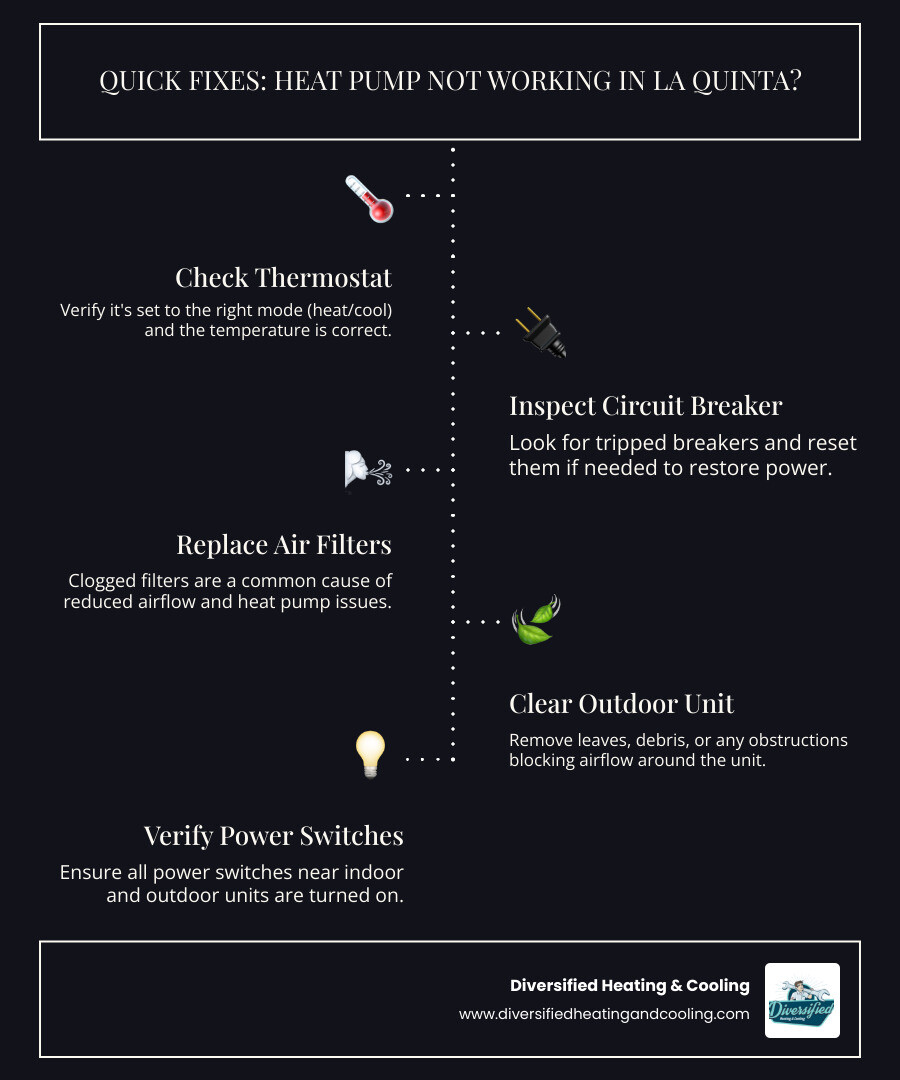
Quick fixes you can try right now:
- Check your thermostat – Verify it’s set to the right mode (heat or cool) and the temperature setting is correct
- Inspect your circuit breaker – Look for tripped breakers and reset them if needed
- Replace dirty air filters – Clogged filters are one of the most common causes of heat pump problems
- Clear outdoor unit obstructions – Remove leaves, debris, or anything blocking airflow around the outdoor unit
- Verify power switches – Make sure all power switches near the indoor and outdoor units are turned on
If you’ve tried these steps and your heat pump still isn’t working, you likely need professional help. For comprehensive HVAC solutions, check out our heating and cooling services. When you need immediate assistance, our heat pump repair team is ready to restore your comfort.
First Steps: Simple Troubleshooting for Your Heat Pump
Before you reach for the phone to call for help, there are several straightforward checks you can do yourself when your heat pump not working in la quinta ca becomes a reality. Think of these as your first line of defense—simple steps that can either solve the problem completely or at least help identify what’s going on. We’ve seen countless situations where a quick five-minute check saved homeowners hours of discomfort and unnecessary service calls.
The good news? Most of these troubleshooting steps require nothing more than your eyes, hands, and a few minutes of your time. Let’s walk through them together.
Check Your Thermostat and Power
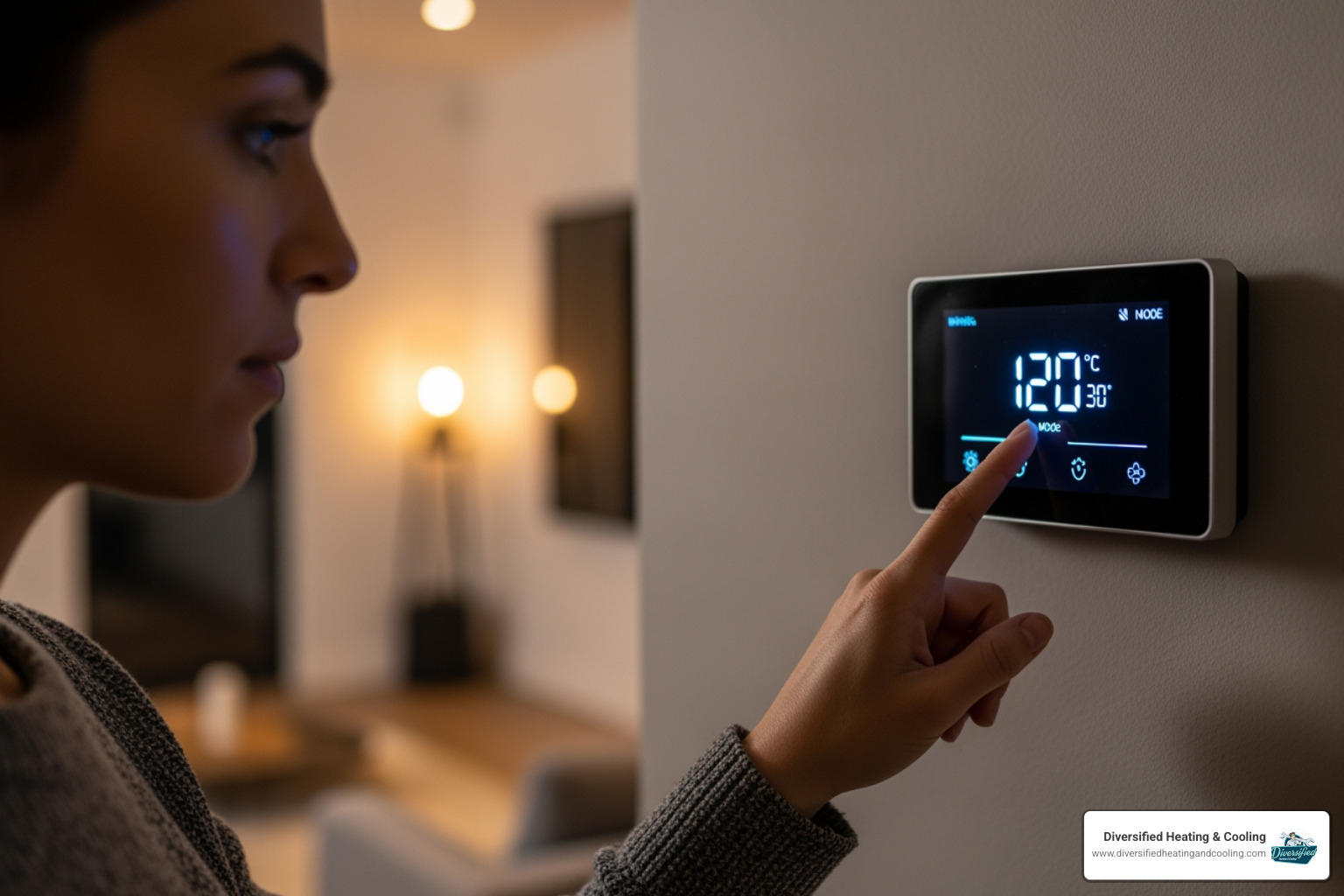
Your thermostat acts as the brain of your heating and cooling system, so naturally, that’s where we start. If your display screen is completely blank, don’t panic—it might just need fresh batteries. We know it sounds almost too simple, but dead thermostat batteries are one of the most common reasons people think their system has failed.
Once you’ve confirmed the thermostat has power, take a close look at your settings. Is it set to heat mode when you need warmth, or cool mode when you need relief from La Quinta’s desert heat? Make sure your temperature setting makes sense too. If you want heating and the room is currently 68 degrees, your thermostat should be set higher than that—say, 72 degrees. If the settings are too close to the current temperature, your heat pump won’t even try to turn on.
Next, head to your home’s electrical panel and look for any tripped circuit breakers. A tripped breaker will be in a middle position or flipped to “off,” and it’s your system’s way of protecting itself from electrical problems. Try resetting it by switching it fully off and then back on. If it trips again immediately, stop there—repeatedly resetting a breaker can be dangerous and signals a more serious electrical issue that needs professional attention.
Don’t forget to check the power switch near your indoor unit (it often looks like a regular light switch) and the disconnect box near your outdoor unit. These can accidentally get switched off during yard work or cleaning.
Inspect Air Filters and Airflow
Here’s something many homeowners don’t realize: your heat pump needs to breathe, and when it can’t, everything goes downhill fast. Clogged air filters are probably the single most common reason for reduced performance, and they’re also one of the easiest problems to fix.
When your filter gets packed with dust, pet hair, and desert debris (and in La Quinta, we definitely get our share of dust), your system has to strain to pull air through. This creates a cascade of problems—your heat pump works harder, uses more energy, heats or cools less effectively, and wears out faster. We recommend checking your filter every month and replacing it every one to three months, depending on how dusty it is and whether you have pets.
Beyond the filter itself, take a walk around both your indoor and outdoor units. Your outdoor unit needs at least two feet of clear space all around it to function properly. Leaves, dirt, and debris love to accumulate around the outdoor unit, especially after those windstorms we get. Overgrown plants or shrubs might look nice, but they’re choking your system’s ability to exchange air.
Inside your home, make sure furniture, curtains, or storage items aren’t blocking your supply or return vents. We’ve seen beautiful furniture arrangements that completely cover floor vents—it happens more often than you’d think! Also check that any dampers in your ductwork are open in the rooms you’re trying to heat or cool.
These airflow issues might seem minor, but they have a major impact on your comfort and energy bills.
5 Common Reasons Your Heat Pump is Not Working in La Quinta, CA
When your heat pump isn’t performing as it should, it’s often due to one of several common issues. Recognizing these signs early can help prevent minor issues from escalating into major repairs, whether you’re in Yucca Valley, Joshua Tree, or Twentynine Palms.
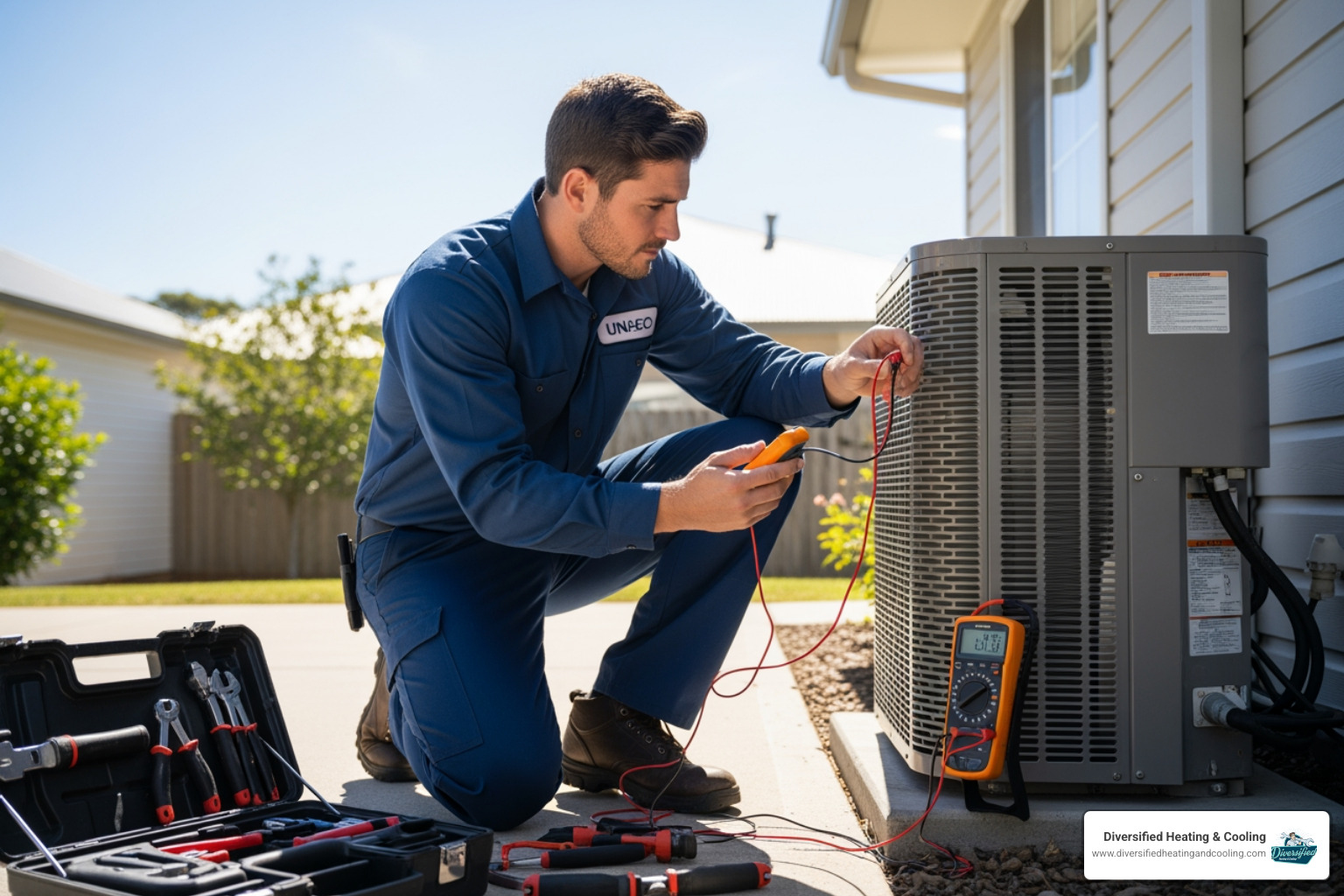
Let’s explore five frequent reasons why your heat pump might be giving you trouble.
1. The System Isn’t Heating or Cooling Properly
One of the most immediate signs of a problem is when your heat pump struggles to maintain comfortable temperatures. If your home isn’t getting warm enough in winter or cool enough in summer, despite the system running, it’s a clear indicator of an issue. This can manifest as inconsistent temperatures throughout your home or simply weak airflow from the vents.
Common culprits for this lack of performance include:
- Incorrect thermostat settings: As mentioned earlier, ensure the thermostat is set to the correct mode and desired temperature.
- Low refrigerant levels: Refrigerant is the substance that absorbs and releases heat. If levels are low due to a leak, your heat pump can’t effectively transfer heat, leading to poor heating or cooling.
- Faulty reversing valve: This component is responsible for switching your heat pump between heating and cooling modes. If it malfunctions, the system might get stuck in one mode or fail to switch properly.
These issues can significantly impact your comfort and often require professional diagnosis and repair.
2. Your Heat Pump is Making Unusual Noises
Heat pumps are generally quiet appliances. So, if you start hearing strange sounds, it’s a clear signal that something is amiss. Different noises can point to different problems:
- Banging or rattling noises: These often indicate loose or worn-out internal parts within the compressor or other components. Loose panels or screws might also be the cause.
- Squealing or grinding sounds: Squealing could mean a belt is slipping or needs replacement, while grinding noises often suggest failing motor bearings.
- Clicking noises: While some clicking is normal during startup or shutdown, excessive or continuous clicking might signal issues with relays or controls.
If you hear banging, rattling, or clicking noises from the heat pump, the compressor itself may be in trouble. These sounds can indicate serious issues, and addressing them promptly can prevent more extensive and costly damage.
3. The Outdoor Unit is Freezing Up
While a light layer of frost on your outdoor unit during winter can be normal, excessive ice buildup that doesn’t melt off, or ice forming on the coils when it’s not extremely cold, is a problem. A layer of ice forming on the coils can seriously weaken a heat pump’s ability to warm your home.
Reasons for a freezing heat pump include:
- Restricted airflow: A dirty air filter or debris around the outdoor unit can impede airflow, causing the coils to get too cold and freeze.
- Low refrigerant: If your heat pump is low on refrigerant due to a leak, it struggles to absorb enough heat, leading to a drop in coil temperature and subsequent freezing.
- Malfunctioning defrost cycle: Heat pumps have a built-in defrost cycle to prevent ice buildup. If this system fails, ice can accumulate rapidly.
- Drainage problems: During the defrost cycle, water needs to drain away. If the drain pan or line is clogged, water can back up and freeze.
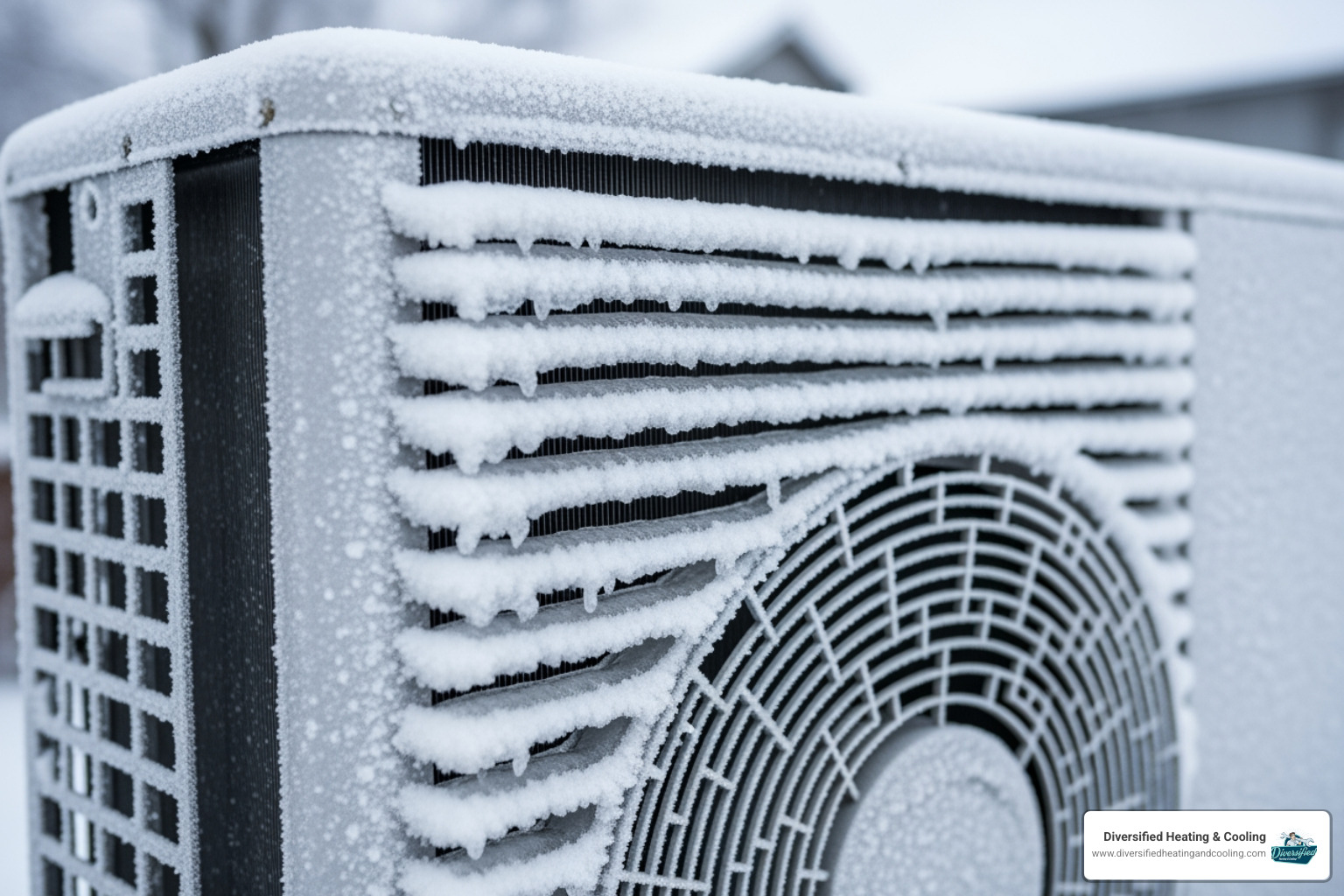
Visible ice accumulation on the unit is a primary indicator of a freezing problem, often accompanied by reduced heating efficiency and unusual noises.
4. The System is Short Cycling
Short cycling occurs when your heat pump turns on and off in quick bursts instead of completing a full heating or cooling cycle. This frequent on/off pattern is inefficient and puts undue stress on your system, leading to increased wear and tear.
Causes of short cycling can include:
- Oversized system: If your heat pump is too large for your home, it can heat or cool the space too quickly, shutting off before completing a full cycle.
- Thermostat issues: A malfunctioning thermostat or one placed in an area with drafts or direct sunlight can cause inaccurate readings, leading to rapid cycling.
- Clogged filters: Restricted airflow from a dirty filter can cause the system to overheat and shut down prematurely.
- Low refrigerant: Similar to poor heating/cooling, low refrigerant can make the system struggle, leading to short cycling as it tries to reach the set temperature.
Short cycling can lead to uneven temperatures and increased energy costs, so it’s important to address the root cause.
5. You Notice a Sudden Spike in Energy Bills
An unexpected rise in energy bills, without any change in your usage patterns, could mean that your heat pump is exerting extra effort to perform. This is a subtle but significant sign that your system is struggling. When a heat pump becomes less efficient, it has to work harder and run longer to achieve the desired temperature, consuming more electricity in the process.
Factors contributing to increased energy bills include:
- Reduced efficiency: As heat pumps age, their efficiency can naturally decline.
- System working harder: Issues like dirty filters, low refrigerant, or mechanical problems force the system to strain, leading to higher energy consumption.
- Aging parts: Components wear out over time, making the system less effective. Heat pumps generally last 10-15 years, and their efficiency can drop significantly near the end of their lifespan.
- Refrigerant leaks: A refrigerant leak not only impairs heating or cooling but also makes the compressor work overtime to compensate, driving up energy usage.
Monitoring your energy bills can provide an early warning sign of underlying heat pump issues that need attention.
Signs of a Serious Problem: When to Be Concerned
Some heat pump problems aren’t quick fixes and may point to more serious issues. Recognizing these warning signs early can save you from costly emergency repairs, prevent safety hazards, and help you avoid a complete system failure. If you’re experiencing the issues below, it’s time to call a professional. Major component failures, like the compressor, can be expensive, and system age plays a crucial role in the likelihood of serious problems.
What to do if your heat pump is not working in La Quinta, CA and trips the breaker
When your heat pump not working in la quinta ca is accompanied by a circuit breaker that keeps tripping, you’re dealing with more than just a simple malfunction. An occasional trip might happen during a power surge, but if you find yourself repeatedly resetting the breaker, your heat pump is signaling an important issue.
A faulty compressor is often the culprit behind frequent breaker trips. When a compressor begins to fail, it draws far more electrical current than it should, causing your circuit breaker to do its job: protect your home by shutting down power. Electrical shorts within the system create an even more dangerous situation, with damaged wiring or failing components creating unsafe pathways for electricity.
Here’s what you need to understand: frequent breaker trips aren’t just frustrating, they’re a genuine safety hazard that can potentially lead to electrical fires or damage to your home’s electrical system. Never try to bypass the breaker or force it to stay on. If your heat pump is causing frequent tripping, turn off the system and call a professional HVAC technician right away. This isn’t a DIY moment.
Symptoms of a Faulty Compressor
Your heat pump’s compressor is essentially its heart, pumping refrigerant through the system. When this critical component starts failing, your system will show clear symptoms that something is seriously wrong.
Hard starts are often the first sign. Your system takes much longer than usual to kick on, or you might hear it struggling or stuttering before it finally starts. This labored startup puts tremendous stress on the entire system. You’ll also experience reduced cooling or heating performance. The system might be running, but the air from your vents isn’t as warm or cool as it should be.
Those loud banging or rattling sounds we mentioned earlier? They’re often compressor-related, caused by loose or worn internal parts. And perhaps most noticeably, you’ll see higher electricity use. A failing compressor has to work overtime, consuming far more power than normal and driving up your energy bills.
Any combination of these symptoms means it’s time for a professional inspection. Compressor repairs or replacements are complex jobs that require specialized knowledge, tools, and refrigerant handling certification.
How Age and Maintenance Affect Your System
Your heat pump isn’t going to last forever. Most heat pumps generally last 10-15 years. After about the tenth year, you’ll likely notice the system’s efficiency starting to decline. Older systems are more prone to breakdowns, require more frequent repairs, and cost more to operate because they’re working harder to deliver the same comfort.
If your heat pump is approaching or past that ten-year mark and you’re facing another repair bill, it might be time to discuss with your HVAC technician whether continued repairs make financial sense or if replacement is the smarter long-term investment.
The good news is that regular maintenance can extend your system’s lifespan and keep it running efficiently. This includes monthly filter changes, cleaning coils, checking refrigerant levels, inspecting electrical connections, and lubricating moving parts.
The role of regular maintenance in preventing breakdowns can’t be overstated. Scheduling professional maintenance twice a year allows technicians to spot potential issues before they become emergencies. This proactive approach improves energy efficiency, extends your system’s lifespan, and prevents dreaded breakdowns. Regular maintenance is your best insurance against unexpected problems, whether you’re in Yucca Valley, Joshua Tree, or Twentynine Palms.
When to Call a Professional for Your Heat Pump Not Working in La Quinta, CA
While some troubleshooting is DIY-friendly, many repairs require professional attention for safety and effectiveness. Knowing when to call an expert saves you time, money, and prevents potential hazards. Simple tasks like checking a thermostat are fine, but issues involving refrigerant or electrical components are best left to trained technicians with the right tools and experience.
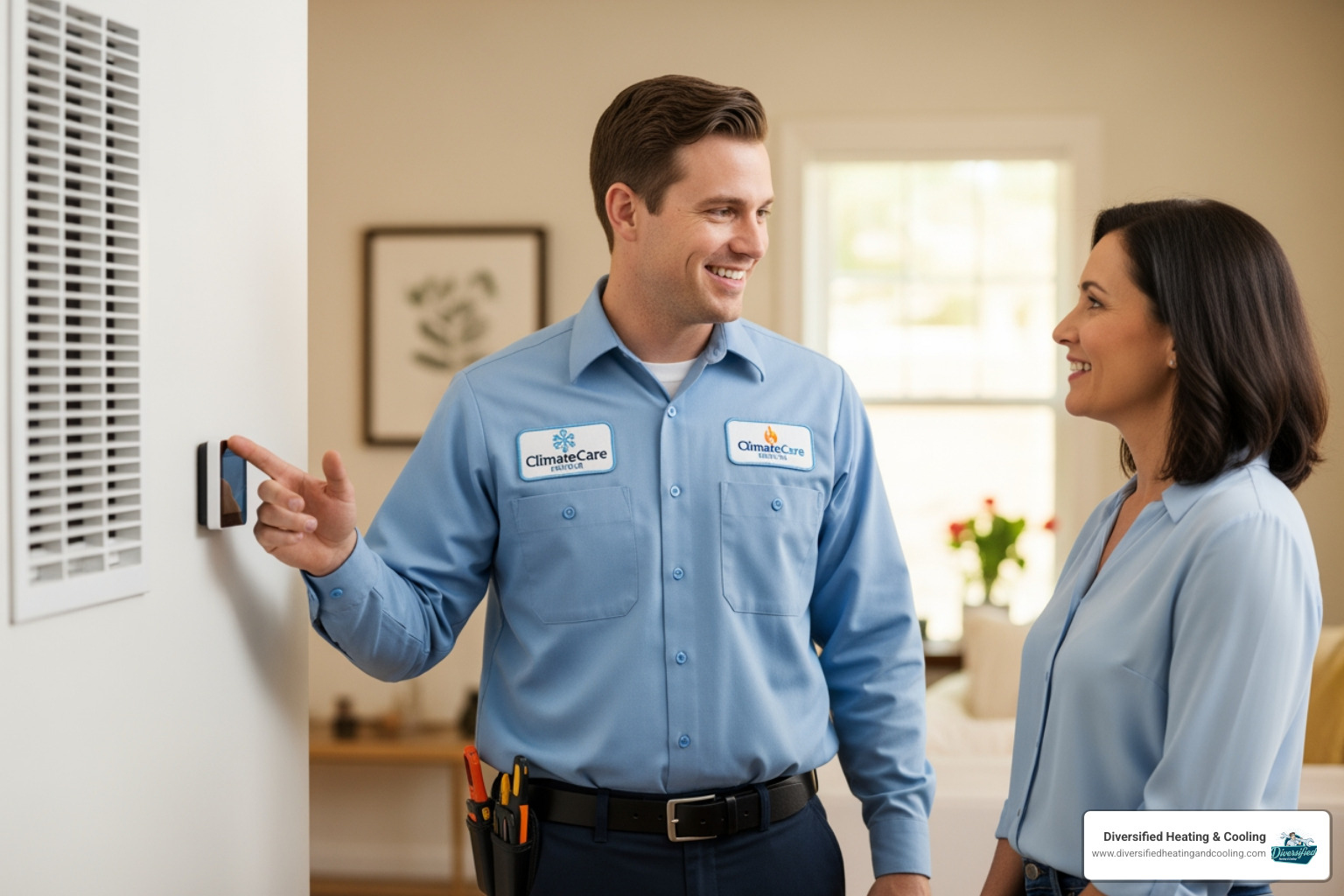
You’ve Tried Basic Troubleshooting
You’ve been through all the steps we outlined earlier. You checked the thermostat settings, replaced the air filter, cleared debris from the outdoor unit, and verified the circuit breaker isn’t tripped. Yet your heat pump not working in la quinta ca situation persists. The system still won’t turn on, or it’s running but not heating or cooling your home properly.
This is the moment to pick up the phone and call us. Persistent issues after you’ve done the basics usually mean there’s something more complex going on inside your system, like a failed component, a refrigerant issue, or a hidden electrical problem.
We’ve seen too many situations where homeowners tried to push further on their own, only to accidentally cause additional damage or put themselves at risk. There’s no shame in calling for help—in fact, it’s the smart move. Our technicians have the diagnostic tools and expertise to pinpoint exactly what’s wrong. When basic fixes don’t work, professional diagnosis is the next logical step.
You Suspect a Refrigerant Leak or Electrical Problem
Some heat pump problems fall squarely into the “call immediately, don’t touch” category. Refrigerant leaks and electrical issues top that list because they’re genuinely dangerous.
If you hear a hissing sound coming from your unit or notice an unusual chemical smell, that’s a telltale sign of escaping refrigerant. Refrigerant is a hazardous substance that requires special handling by licensed and certified technicians. Beyond the safety risks, a leak severely compromises your system’s ability to heat or cool and can damage the compressor—an expensive component to replace.
Electrical problems are equally serious. If you notice a burning smell, see sparks, or find that your breaker keeps tripping, stop what you’re doing and call us right away. Faulty wiring or damaged components can create fire hazards and pose a real risk of electrocution. These aren’t issues you can safely troubleshoot on your own.
We serve homeowners throughout the Coachella Valley, including La Quinta, and have responded to countless emergency calls involving these exact scenarios. Our team arrives prepared with the right safety equipment and expertise to handle these situations properly. Reaching out to a qualified professional is always the right choice to prioritize your safety and your system’s longevity.
When you’re facing a heat pump not working in la quinta ca situation that goes beyond simple fixes, we’re here to help. Our family-oriented approach means we treat your home like it’s our own, providing honest assessments and reliable repairs that restore your comfort quickly.
Restore Your Comfort with Expert Heat Pump Service
When your heat pump not working in la quinta ca situation leaves you frustrated, it’s about more than just inconvenience—it’s about your family’s comfort and well-being. We get it. Living in the desert means your heat pump isn’t just a luxury; it’s essential for surviving those blazing summer days and surprisingly cold winter nights. That’s why at Diversified Heating & Cooling, we’re committed to being the family-oriented, honest, and reliable partner you can count on.
Year-round comfort depends on a heat pump that works when you need it most. Regular maintenance is your best defense against unexpected breakdowns. Simple tasks like changing filters and scheduling professional tune-ups can prevent most common problems before they start. Think of maintenance as an insurance policy for your comfort—it extends your system’s lifespan, keeps energy bills in check, and catches small issues before they become expensive repairs.
But we know that even with the best care, things can go wrong. When they do, our professional expertise is here for you. We’ve seen it all, from frozen coils to failing compressors, and we have the knowledge and tools to diagnose problems quickly and fix them right the first time. Our team serves homeowners throughout Yucca Valley, Joshua Tree, and Twentynine Palms with the same dedication we’d give our own family.
Don’t spend another day uncomfortable in your own home. Whether you need a quick repair, regular maintenance, or you’re considering a system upgrade, we’re ready to help. For reliable service that puts your comfort first, reach out to us today. We’re here to make sure your home stays the comfortable oasis you deserve, no matter what the desert throws at you.