



Why a Heat Pump Failure in Big Bear City Demands Quick Action
When your heat pump broken in big bear city ca fails at 6,752 feet, you need a solution quickly. Big Bear City’s high altitude, sub-freezing temperatures, and heavy snowfall put immense stress on heating systems. A broken heat pump is more than an inconvenience; it’s a safety issue when temperatures drop.
Quick Diagnosis Steps for a Broken Heat Pump:
- Check your thermostat – Verify it’s set to “Heat” mode and batteries are fresh
- Inspect the circuit breaker – Reset if tripped
- Examine your air filter – Replace if clogged or dirty
- Clear the outdoor unit – Remove snow, ice, and debris blocking airflow
- Look for ice buildup – Excessive frost on coils signals a defrost cycle problem
While many simple issues can be resolved with basic troubleshooting, knowing when to call a professional prevents costly damage. This guide covers the warning signs and safe, step-by-step checks you can perform before deciding if you need expert help.
If you’re facing ongoing problems or want to learn more about heat pump problems and solutions, the right information can save you time and money.
Common Signs Your Big Bear Heat Pump Needs Repair
Catching warning signs early can prevent an expensive emergency when you have a heat pump broken in big bear city ca. In Big Bear’s harsh climate, being proactive is key. Look for these red flags:
- Inadequate Heating or Cooling: If your home isn’t reaching the set temperature, the system is struggling. This could be due to a simple clogged filter or a more complex issue like a refrigerant leak.
- Unusual Noises: Your heat pump shouldn’t make loud, disruptive sounds. We’ll detail what specific noises mean below.
- Increased Energy Bills: A sudden spike in your bills without a change in usage indicates your heat pump is working inefficiently.
- Frequent Cycling: If the system turns on and off constantly, it’s short cycling. This strains components and often points to thermostat or refrigerant issues.
For a deeper dive into these warning signs, check out our guide on Signs Heat Pump Needs Professional Attention.
Strange Noises and What They Mean
Your heat pump communicates problems through sound. Listen for these warnings:
- Squealing: Usually indicates a worn fan belt that needs replacement before it snaps.
- Grinding: A serious noise pointing to failing motor bearings. Continued use can destroy the motor.
- Hissing or Gurgling: A clear sign of a refrigerant leak. Hissing means refrigerant is escaping, while gurgling suggests you’re already low.
- Rattling or Banging: Suggests loose parts, like fan blades or other components, which can cause catastrophic damage if they hit electrical parts.
Poor Performance Indicators
Beyond strange noises, poor performance is a clear sign of trouble:
- Blowing Cool Air in Heat Mode: Could be low refrigerant, a malfunctioning reversing valve, or failed auxiliary heat strips.
- Weak Airflow: Often caused by a clogged air filter, blocked vents, or a struggling blower motor. Restricted airflow prevents your home from heating effectively.
- Ice on the Outdoor Unit: While some frost is normal, excessive ice that doesn’t clear after a defrost cycle indicates a problem with the defrost control, refrigerant levels, or a blocked coil.
- System Runs Constantly: An undersized unit, refrigerant leak, or faulty thermostat can cause the system to run nonstop, increasing wear and energy costs.
- Clogged Filters: This common issue restricts airflow, reduces efficiency, and can lead to breakdowns. Regular changes are the easiest way to prevent this.
- Thermostat Issues: A faulty thermostat can cause a range of problems, from the unit not turning on to incorrect temperature readings.
Why the Big Bear Climate is Tough on Heat Pumps
Living in Big Bear City means your heat pump faces some of the toughest working conditions in California. When you’re dealing with a heat pump broken in big bear city ca, the environment itself is often a major factor.
- High Altitude: At 6,752 feet, the thin air makes your heat pump work harder to circulate air, causing extra strain on components.
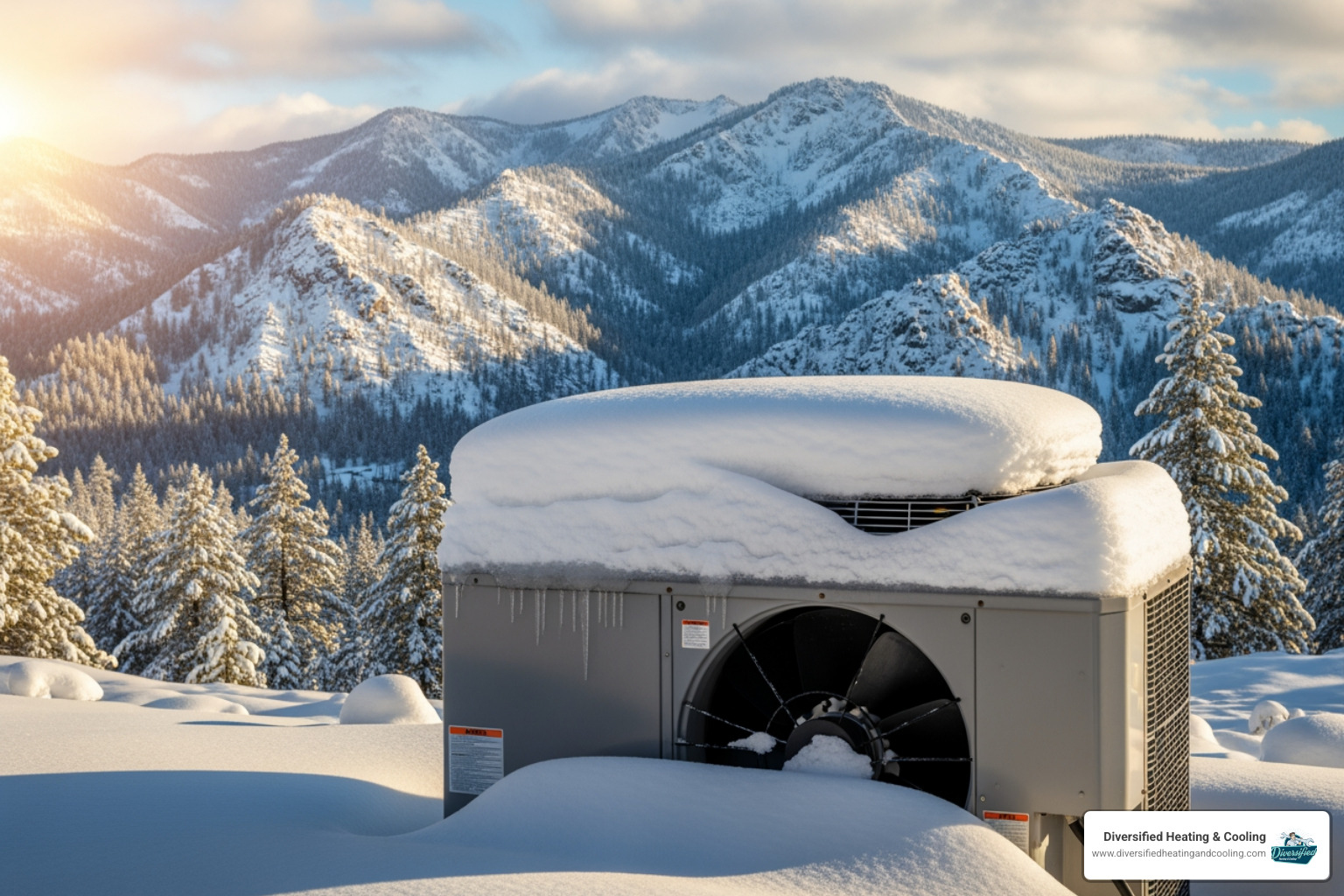
- Heavy Snowfall: An average of 72 inches of snow can bury and suffocate the outdoor unit, preventing it from accessing the air it needs to generate heat.
- Extreme Temperature Fluctuations: Rapid temperature swings force the system to adjust constantly, while frigid nights make it struggle to extract heat from the cold air.
- Frozen Outdoor Coils: The combination of cold and moisture can overwhelm the defrost cycle, leading to ice buildup that cripples the unit. This increased workload on components means parts wear out faster than in milder climates.
The Impact of Altitude and Snow on a heat pump broken in big bear city ca
Big Bear’s elevation and snowfall directly impact your system. The reduced air density at 6,752 feet means the compressor and fan must work harder, consuming more energy and wearing out faster. When average 72 inches of snowfall buries your outdoor unit, its efficiency plummets. The defrost cycle challenges are also significant; the system may run its defrost mode constantly during a storm, which is hard on the equipment. This is why the importance of cold-climate models, which are engineered to operate efficiently in low temperatures, cannot be overstated for Big Bear homes.
Preventing Climate-Related Breakdowns
You can protect your heat pump from Big Bear’s climate. Keeping the outdoor unit clear of snow and ice is crucial. Use a broom to gently clear at least two feet of space around the unit after every snowfall. Also, ensuring proper drainage prevents water from pooling and refreezing at the base. While a unit cover in the off-season can protect a non-operating unit, never cover it while it’s in use. Most importantly, the importance of professional sizing for high altitude ensures your unit has enough power for Big Bear’s thin air. Regular professional maintenance is the best way to verify that all components, especially the defrost cycle, are ready for winter. For more tips, see our guide on How to Improve Your Heat Pump’s Performance.
A Homeowner’s DIY Troubleshooting Checklist
When your heat pump broken in big bear city ca acts up, a few simple checks can often resolve minor issues without a service call. Before you pick up the phone, walk through these safe and straightforward diagnostic steps.

Basic Steps for a heat pump broken in big bear city ca
- Check Thermostat Batteries: If the display is dim or blank, replace the batteries.
- Verify Thermostat Settings: Ensure it’s set to “Heat” mode, with the target temperature higher than the current room temperature and the fan on “Auto.”
- Reset the Circuit Breaker: Find your breaker panel and look for a tripped breaker. Flip it fully to “off,” then back to “on.”
- Inspect the Air Filter: A clogged filter chokes your system. If you can’t see light through it, replace it. Check it every 4-6 weeks during winter.
- Clear the Outdoor Unit: Remove any snow, ice, or debris blocking the unit. It needs at least two feet of clearance on all sides to function.
For more ways to keep your system running smoothly, check out our Tips on How to Improve Your Heat Pump’s Performance.
When to Stop and Call a Professional
While DIY checks are helpful, some problems require an expert. Stop and call a professional if you encounter:
- A circuit breaker that trips repeatedly. This indicates a serious electrical fault.
- Hissing sounds or visible frost on refrigerant lines, which signal a refrigerant leak. Handling refrigerant requires certification.
- Loud mechanical noises like grinding, banging, or persistent squealing that point to internal component failure.
- The heat pump won’t turn on after you’ve completed all the basic checks.
- Frozen coils that don’t thaw during the defrost cycle, suggesting a malfunction in the defrost system.
Repair or Replace? Making the Right Decision in Big Bear
When your heat pump broken in big bear city ca requires frequent service, you face a tough decision: repair or replace? Considering a few key factors can help you make the right financial choice for your home.
| Factor | Repair Favored | Replace Favored |
|---|---|---|
| Age | Less than 10 years old | 10-15+ years old |
| Repair Freq. | Infrequent, minor issues | Frequent, major breakdowns |
| Efficiency | Still performing well, reasonable energy bills | High energy bills, noticeable performance decline |
| Warranty | Still under warranty | Warranty expired, repairs not covered |
Key Factors to Consider
Consider these factors when deciding:
- Heat Pump Lifespan: Most units last 10-15 years. If your unit is younger, a repair is often cost-effective. If it’s older, replacement may be a better investment.
- The 50% Rule: If a repair costs more than half the price of a new system, replacement is usually the smarter option.
- Repair Frequency: If you’re calling for service multiple times a year, the cumulative cost of repairs can quickly approach the cost of a new, reliable unit.
- Rising Energy Bills: A steady increase in your energy bills means your old unit is losing efficiency. A new system can offer significant monthly savings.
- Warranty Status: Repairs on a unit still under warranty are often the best choice. Once the warranty expires, you bear the full cost of any future breakdowns.
For more on this topic, see our guide on the Reason For Heat Pump Replacement.
Benefits of a Modern Heat Pump
Replacing an old unit offers significant advantages:
- Improved Energy Efficiency: Modern heat pumps have much higher SEER and HSPF ratings, translating to lower utility bills.
- Better Performance in Cold Climates: Cold-climate models are designed to provide reliable heat even when Big Bear temperatures drop below freezing.
- Quieter Operation: Advances in technology make new units significantly quieter than their predecessors.
- Smart Thermostat Compatibility: Control your home’s temperature and monitor energy use from anywhere with your smartphone.
- New Warranty: A new system comes with a new warranty, providing peace of mind and protection against repair costs.
Frequently Asked Questions about Big Bear Heat Pump Issues
Living in Big Bear City comes with unique heating challenges. Here are answers to some of the most common questions we hear from mountain homeowners.
How does a broken heat pump impact my energy bills?
A malfunctioning heat pump is inefficient. Issues like refrigerant leaks or clogged filters force it to run longer and work harder to heat your home. This extra work directly translates to a significant spike in your electricity usage and higher monthly bills. If your costs are rising unexpectedly, your heat pump broken in big bear city ca is likely the cause.
What are the benefits of using a local HVAC professional in Big Bear?
Big Bear’s climate is extreme. A local professional understands the unique challenges of high altitude (6,752 ft) and heavy snow. We live and work here, so we know how thin air affects performance and which cold-climate models work best. Local pros also offer faster response times for emergencies—a critical factor when it’s freezing outside. We ensure your system is sized and installed correctly for mountain life.
What maintenance can I do to prevent my heat pump from breaking down?
Preventive maintenance is key in Big Bear. Follow these steps to keep your system running strong:
- Change Air Filters Regularly: Check them monthly during winter and replace when dirty to ensure good airflow.
- Keep the Outdoor Unit Clear: After a storm, use a broom to clear snow and debris, maintaining at least two feet of clearance on all sides.
- Keep Indoor Vents Unblocked: Don’t close vents or block them with furniture, as this restricts airflow and strains the system.
- Schedule Annual Professional Maintenance: A professional tune-up each fall is the most important step. A technician can clean coils, check refrigerant, test the defrost cycle, and catch small problems before they become major breakdowns.
For more detailed guidance, review our Tips on How to Improve Your Heat Pump’s Performance.
Your Next Step for a Warm and Comfortable Big Bear Home
When you have a heat pump broken in big bear city ca, simple DIY checks can often solve the issue. However, if you’ve tried troubleshooting and the problem persists, or if you’re dealing with electrical issues, refrigerant leaks, or loud mechanical noises, it’s time to call a professional for your safety and to prevent further damage.
A well-maintained heat pump is your best defense against Big Bear’s harsh winters. Regular filter changes and keeping your outdoor unit clear are essential, but nothing replaces annual professional maintenance to ensure reliability.
At Diversified Heating & Cooling, we are a family-oriented business that understands the unique demands of high-altitude living. We provide honest, reliable service to our neighbors in mountain communities. Whether you need an emergency repair, routine maintenance, or are considering a new, efficient system, our team is ready to help. Don’t wait until you’re left in the cold—reach out to us to keep your Big Bear City home warm and comfortable.