



When Your Heat Pump Stops Keeping You Warm
If your heat pump blowing cold air in Big Bear Lake CA has left you shivering, you’re not alone. When mountain temperatures drop, a faulty heating system is the last thing you need. The good news is that many causes are simple to diagnose, and some you can even fix yourself.
Quick Answer: Why Your Heat Pump is Blowing Cold Air
Your Big Bear heat pump may blow cold air due to:
- Normal defrost cycle: Temporary cold air while melting ice from outdoor coils (lasts 5-15 minutes).
- Wrong thermostat settings: Set to “cool” instead of “heat” or fan set to “on” instead of “auto.”
- Dirty air filter: Blocked airflow reduces heating capacity.
- Refrigerant leak: Low refrigerant prevents proper heat transfer.
- Faulty reversing valve: Stuck in cooling mode even during winter.
- Ice buildup: Snow or ice blocking the outdoor unit in Big Bear’s harsh winters.
When to Call a Pro: If basic checks don’t solve the problem, or you notice hissing sounds, icy coils, or complete system failure, professional help is needed.
For comprehensive heat pump solutions in the Morongo Basin area, explore our heat pump services, or if you’re ready for expert help, contact Diversified Heating & Cooling for fast, reliable service.
Big Bear Lake’s winter climate is no joke. Unlike furnaces that burn fuel, heat pumps transfer heat from the outside air into your home. When something goes wrong, that warm air can turn frustratingly cold. Understanding whether your system is malfunctioning or just going through a normal cycle is the first step to restoring your comfort.

Is It a Real Problem? Differentiating Normal Operation from a Malfunction
If your heat pump blowing cold air in Big Bear Lake CA feels cooler than an old furnace, that doesn’t automatically mean it’s broken. Heat pumps deliver air around 85-90°F, which is warm enough to heat your home but can feel cool against your 98.6°F body temperature. This is completely normal.
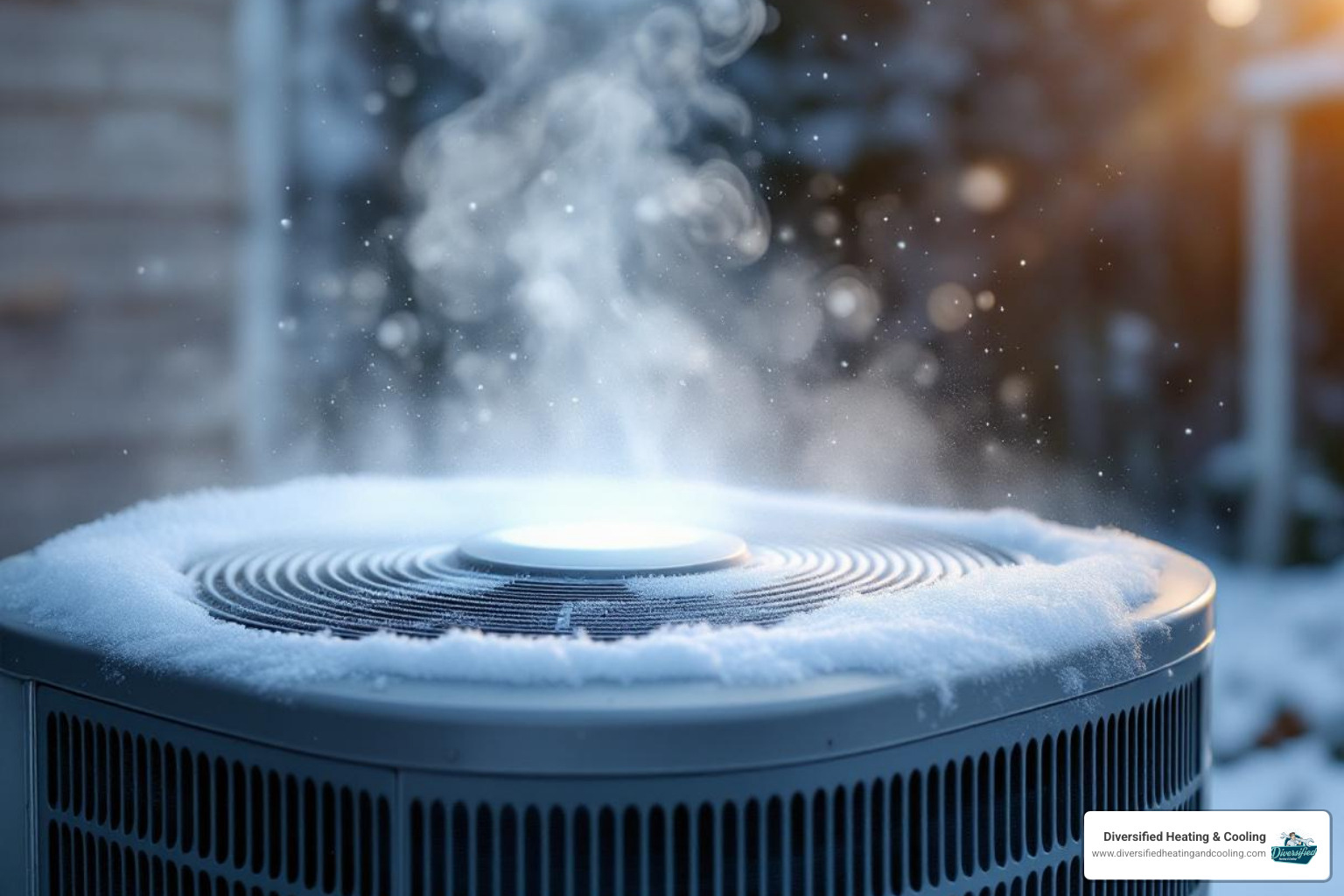
You might also see steam rising from your outdoor unit or feel cold air from vents for 5-15 minutes. This is likely the defrost cycle. In Big Bear’s freezing winters, frost builds up on the outdoor coils as the unit pulls in heat. To melt it, the system briefly reverses, sending warm refrigerant outside. During this time, the indoor fan may circulate unheated air. This is a sign your heat pump is working efficiently to keep you warm all winter.
How can I tell if my heat pump is working correctly?
The best way to know for sure is with a simple thermometer test.
- Use a reliable thermometer to measure the air temperature at a supply vent (blowing air out).
- Measure the temperature at the return air vent (pulling air in).
- Subtract the return air temperature from the supply air temperature.
If your heat pump is working properly, the difference should be 15-30 degrees. For example, if your return air is 70°F, your supply air should be 85-100°F. If there’s little to no difference, you likely have an issue that needs attention.
This quick check helps you separate what feels cold from what is cold. While you’re at it, ensure no furniture or curtains are blocking your vents, as this can also reduce efficiency. For more ways to keep your system running at its best, check out our Tips on How to Improve Your Heat Pump’s Performance.
Common Culprits: Why Your Heat Pump is Blowing Cold Air in Big Bear Lake, CA
When your heat pump blowing cold air in Big Bear Lake CA isn’t just a defrost cycle, it’s time to investigate. Several common issues could be the cause, and understanding them is the first step toward getting warm again.

Many of these problems are simple to identify. From thermostat settings to more serious issues like refrigerant leaks or a faulty reversing valve, we’ll walk you through the possibilities.
Could it be the thermostat settings?
Before assuming a major repair is needed, check your thermostat. An incorrect setting is a frequent cause of a heat pump blowing cold air in Big Bear Lake CA and is an easy fix.
- Mode: Is it set to “Heat”? An accidental switch to “Cool” will do the opposite of what you want.
- Fan: Is the fan set to “Auto”? If it’s on “On,” the fan runs constantly, circulating cool air between heating cycles.
- Batteries: If your thermostat is battery-powered, try a fresh set. Weak batteries can cause communication errors.
- Placement: Is the thermostat near a draft or heat source? This can cause false readings, tricking your system into shutting off too soon.
Is a refrigerant leak causing my heat pump to blow cold air in Big Bear Lake, CA?
Refrigerant is the fluid that transfers heat into your home. It operates in a sealed system, so if levels are low, you have a leak. This prevents the heat pump from warming your air effectively and can lead to serious damage if ignored.
Signs of a refrigerant leak include:
- Hissing sounds from the outdoor unit or refrigerant lines.
- Icy coils on the outdoor unit that don’t melt after a defrost cycle.
- Oily residue on or around refrigerant components.
Handling refrigerant requires EPA certification and special tools, so this is a job for professionals. If you notice these signs, it’s time to call for service. Learn more about Signs Heat Pump Needs Professional Attention.
What is a faulty reversing valve?
The reversing valve is a component that tells your heat pump whether to heat or cool by directing the flow of refrigerant. If this valve gets stuck in cooling mode, your heat pump will blow cold air even when the thermostat is set to heat.
The main symptom is straightforward: your system consistently blows cold air when set to heat. You might also see the outdoor unit freezing up more than it should. A faulty reversing valve is a complex mechanical problem that requires professional diagnosis and repair. Attempting a DIY fix can cause more damage, so it’s best to call an experienced HVAC technician.
DIY Troubleshooting Steps for Big Bear Homeowners
When your heat pump blowing cold air in Big Bear Lake CA has you feeling the chill, there are several checks you can perform before calling for service. These simple steps are safe for any homeowner and might solve the problem quickly. Safety first: always shut off power to your unit at the circuit breaker before performing any hands-on work.
What can I check before calling for help?
Start with the simplest possibilities to see if you can restore your heat.
- Thermostat Settings: Double-check that the system is set to “Heat” and the fan is on “Auto.” Also, check for dead batteries if your thermostat uses them.
- Circuit Breaker: Heat pumps use a lot of power and can sometimes trip a breaker. Find the breaker for your HVAC system in your electrical panel. If it’s tripped (in the middle or “Off” position), flip it fully to “Off,” wait a few seconds, and then flip it back to “On.” If the breaker trips again, do not reset it. This indicates a serious electrical issue that requires a professional.
How do I address potential airflow issues?
Your heat pump needs clear airflow to work correctly. Restricted airflow is a common and fixable problem.
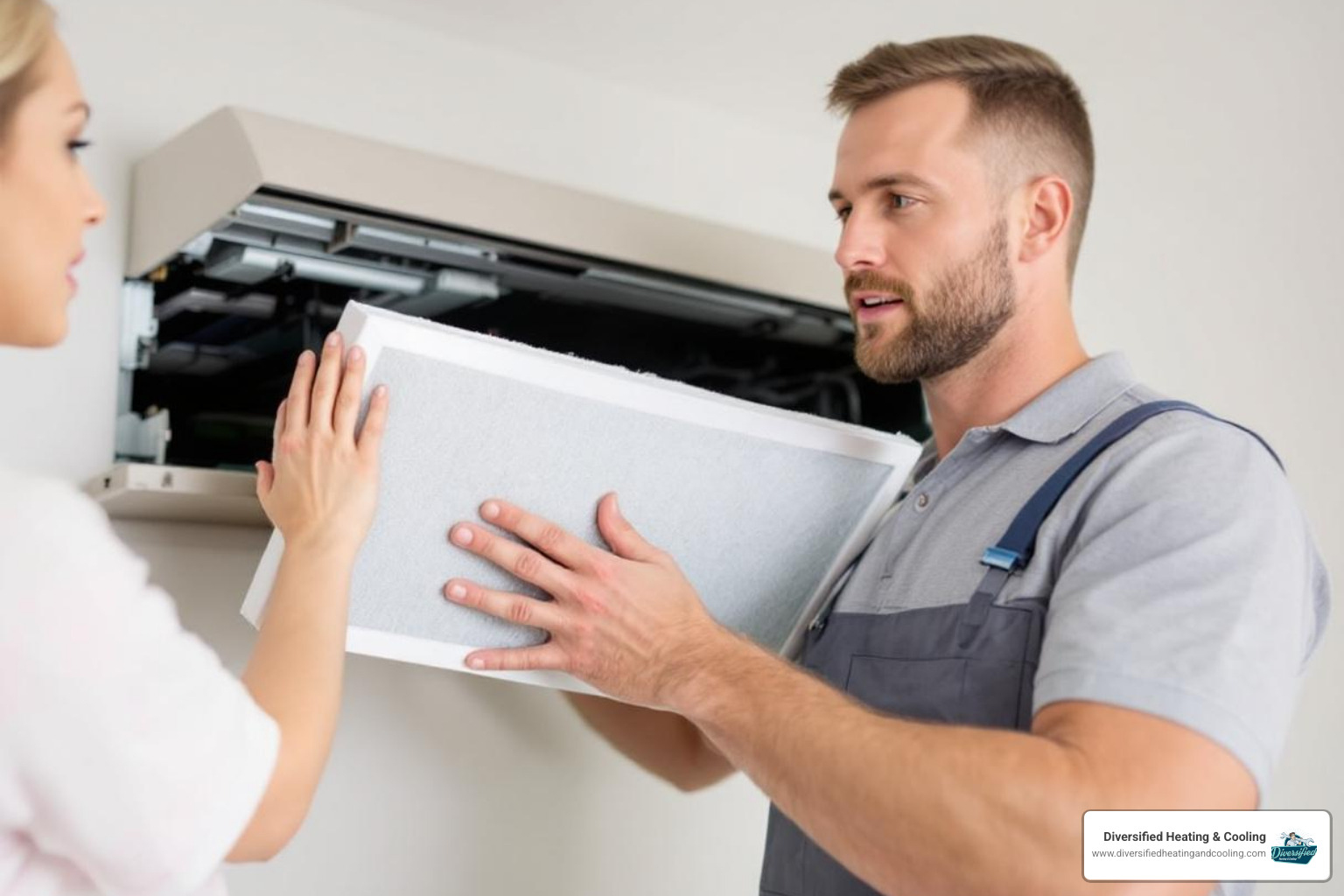
- Inspect Your Air Filter: A dirty air filter is a top cause of heating problems. Locate your filter (usually in the return air duct or indoor unit) and hold it up to a light. If you can’t see light through it, it’s time for a replacement. Check your filter monthly and replace it every 1-3 months.
- Clear Your Outdoor Unit: Big Bear’s winters can bury your outdoor unit in snow and debris. Ensure there is at least two feet of clearance on all sides. Gently brush away snow, leaves, and branches. If the unit is iced over, you can pour lukewarm water over it to help it melt—never use hot water or sharp objects, which can cause damage.
If these steps don’t resolve the issue, it’s time for professional support. For comprehensive maintenance and repair, visit our Heat Pumps Services Yucca Valley CA page.
When to Call a Professional vs. When to Consider Replacement
You’ve checked the thermostat, changed the filter, and cleared the outdoor unit, but your heat pump blowing cold air in Big Bear Lake CA is still a problem. When DIY fixes don’t work, it’s time to bring in professionals to diagnose complex issues safely.
Not every service call means you need a new system. A skilled technician can often perform a straightforward repair. However, sometimes replacement is the more financially sound option, especially for older, unreliable units. For insights on when a new system is recommended, check out our page on Professionals Recommend Heat Pump Installation.
When should I call an HVAC professional for my heat pump blowing cold air in Big Bear Lake, CA?
Your safety and your system’s integrity are paramount. Call our team immediately if you encounter any of these signs:
- Suspected Refrigerant Leak: Hissing sounds, persistent ice on coils, or an oily residue are clear signs of a leak that requires a certified technician.
- Loud or Unusual Noises: Banging, grinding, or squealing indicates an internal mechanical problem that could worsen if ignored.
- Electrical Problems: If the circuit breaker repeatedly trips, there’s an underlying electrical fault that poses a safety risk.
- Unit is Completely Iced Over: A unit encased in thick ice suggests a serious issue beyond a normal defrost cycle, such as low refrigerant or a failed component.
- Persistent Issues: If the problem continues or returns after you’ve tried the basic fixes, it’s time for an expert diagnosis.
For more guidance, visit our page on Signs Heat Pump Needs Professional Attention.
Is it time to repair or replace my heat pump?
Deciding whether to repair or replace depends on several key factors. Here’s how to weigh your options.
- Unit Age: Heat pumps typically last 10-15 years. If your system is over 10 years old and having major issues, replacement is often the smarter long-term investment.
- Repair Frequency and Cost: If you’re facing frequent breakdowns or a single repair that costs 40-50% of a new unit’s price, investing in a new, warrantied system is usually more economical.
- Energy Efficiency: Newer heat pumps are far more efficient, especially in cold climates like Big Bear. Upgrading can lead to significant savings on your energy bills, helping to offset the initial cost.
This table can help guide your decision:
| Factor | Lean Towards Repair | Lean Towards Replacement |
|---|---|---|
| Age | Under 10 years old | 10-15+ years old |
| Repair Frequency | Infrequent, minor issues | Frequent, major breakdowns |
| Energy Bills | Consistent, reasonable | Steadily increasing |
| Repair Cost | Less than 40-50% of new system cost | More than 40-50% of new system cost |
| Performance | Generally good, minor hiccups | Inconsistent heating, significant discomfort |
We can help you make an informed, pressure-free decision. For a deeper look at when replacement is the best option, see our Reason for Heat Pump Replacement.
Maintaining Your Heat Pump for Big Bear Winters
Preventative maintenance is your best defense against a heat pump blowing cold air in Big Bear Lake CA during a cold snap. Homeowners who invest in routine upkeep enjoy more efficient, longer-lasting systems with far fewer surprise breakdowns. In a demanding climate like Big Bear Lake, where your heat pump works overtime, regular professional attention is even more critical.
How often should heat pumps in Big Bear Lake be serviced?
We strongly recommend professional servicing twice a year for heat pumps in our high-altitude environment: a fall tune-up for heating and a spring tune-up for cooling.
- Fall Tune-Up (Sept/Oct): Prepares your system for winter by verifying all heating components, checking refrigerant levels, and testing the defrost cycle.
- Spring Tune-Up: Addresses any wear and tear from the winter and ensures your system is ready for efficient cooling in the summer.
Between professional visits, you can help maintain your system with these simple tasks:
- Change the Air Filter: This is the most important task. Check it monthly and replace it every 1-3 months to ensure proper airflow.
- Keep the Outdoor Unit Clear: Maintain at least two feet of clearance around your unit. Gently remove snow, ice, leaves, and other debris.
- Check Thermostat Batteries: Replace them annually to ensure reliable communication with your heat pump.
- Listen for Unusual Noises: Report any grinding, squealing, or rattling to your HVAC technician promptly.
A professional tune-up is a thorough inspection that goes beyond these steps, identifying potential issues before they lead to a breakdown. This proactive approach saves you money and provides peace of mind. For installation services that set your system up for success, explore our Heat Pump Installation by Professionals.
Conclusion: Ensuring a Warm and Cozy Big Bear Home
Facing a heat pump blowing cold air in Big Bear Lake CA is frustrating, but the solution is often within reach. We’ve covered the most common causes, from a normal defrost cycle to simple fixes like changing an air filter or adjusting the thermostat.
However, when the problem is more serious—indicated by hissing sounds, persistent ice, or recurring issues—professional help is essential. In Big Bear Lake’s demanding climate, a reliable heating system isn’t a luxury; it’s a necessity. Regular maintenance is the best way to prevent heating emergencies and ensure your system runs efficiently all winter.
At Diversified Heating & Cooling, we are committed to keeping our neighbors in the Morongo Basin area—from Big Bear Lake to Yucca Valley and beyond—warm and comfortable. We’ve built our reputation on being honest, reliable, and focused on our customers’ needs.
Whether your heat pump needs a tune-up, a repair, or you’re considering a more efficient replacement, we’re here to provide expert guidance. Don’t spend another night shivering. Contact us today, and let us help restore warmth and comfort to your Big Bear home.