



Why Commercial HVAC Water Leaks Demand Your Attention in Indian Wells
A commercial hvac leaking water in indian wells ca is more than an inconvenience; it’s a threat to your business that can cause structural damage, mold, and operational shutdowns. In the harsh Indian Wells climate, HVAC systems are pushed to their limits, making leaks from clogged condensate lines, frozen coils, and worn drain pans common. The desert dust accelerates these problems, making regular maintenance essential.
Quick answers for commercial HVAC water leaks:
- Most common cause: Clogged condensate drain line from desert dust
- Immediate action: Turn off the system and call a professional
- Prevention: Schedule biannual maintenance with pre-summer and pre-winter checks
- Unique risks: Rooftop units face additional drainage challenges and roof penetration issues
- Red flags: Puddles near units, water stains, musty odors, or reduced cooling
If you’re dealing with an AC leak right now, check out our guide on outdoor AC units leaking water, or contact Diversified Heating & Cooling for immediate commercial service.
Your AC creates condensation as it removes humidity. This water normally drains away through a condensate line and pan. Leaks occur when this process fails due to a clogged line, a cracked pan, or frozen coils, causing water to spill onto your ceilings, floors, or equipment.
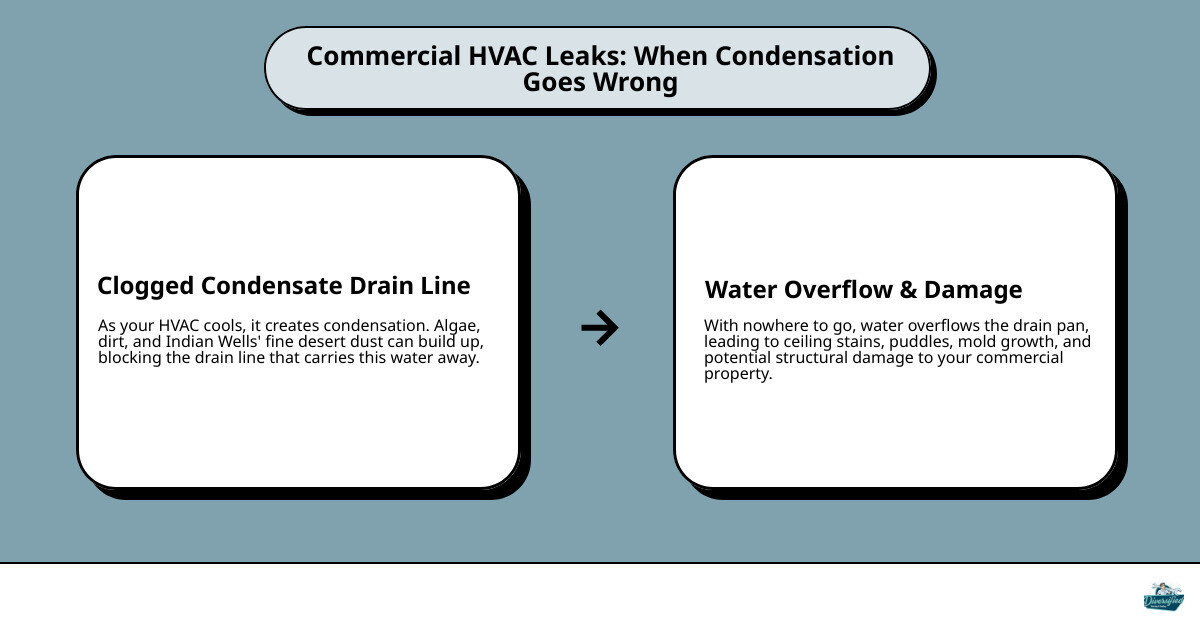
Common Causes of Commercial HVAC Leaking Water in Indian Wells, CA
When you see a commercial hvac leaking water in indian wells ca, it’s a clear sign something is wrong. Based on our experience at Diversified Heating & Cooling, these are the most common culprits in the Indian Wells area.
The number one cause is a clogged condensate drain line. Your HVAC system removes moisture from the air, which should drain outside. However, algae, dirt, and the fine desert dust in Indian Wells can create stubborn blockages. This forces water to back up, overflow the drain pan, and leak into your building.
Frozen evaporator coils are another frequent issue. If a dirty air filter or low refrigerant restricts airflow, the coils can get too cold and ice over. When the system cycles off, this ice melts all at once, overwhelming the drain pan and causing a leak.
Sometimes, the problem is a simple cracked drain pan. Over time, plastic pans can become brittle and crack, while metal pans can rust through. Any hole allows condensation to leak directly into your property.
Low refrigerant levels cause a domino effect. Insufficient refrigerant makes the coils too cold, leading to ice buildup and the same melting-and-overflow scenario. It also forces your system to work harder, stressing all components. If you suspect this issue, our guide on outdoor AC units leaking water has more information.
Finally, improper installation can cause chronic leaks. If the condensate line isn’t sloped correctly or connections are loose, water won’t drain properly and will eventually overflow. This is a common source of persistent issues in newer installations.
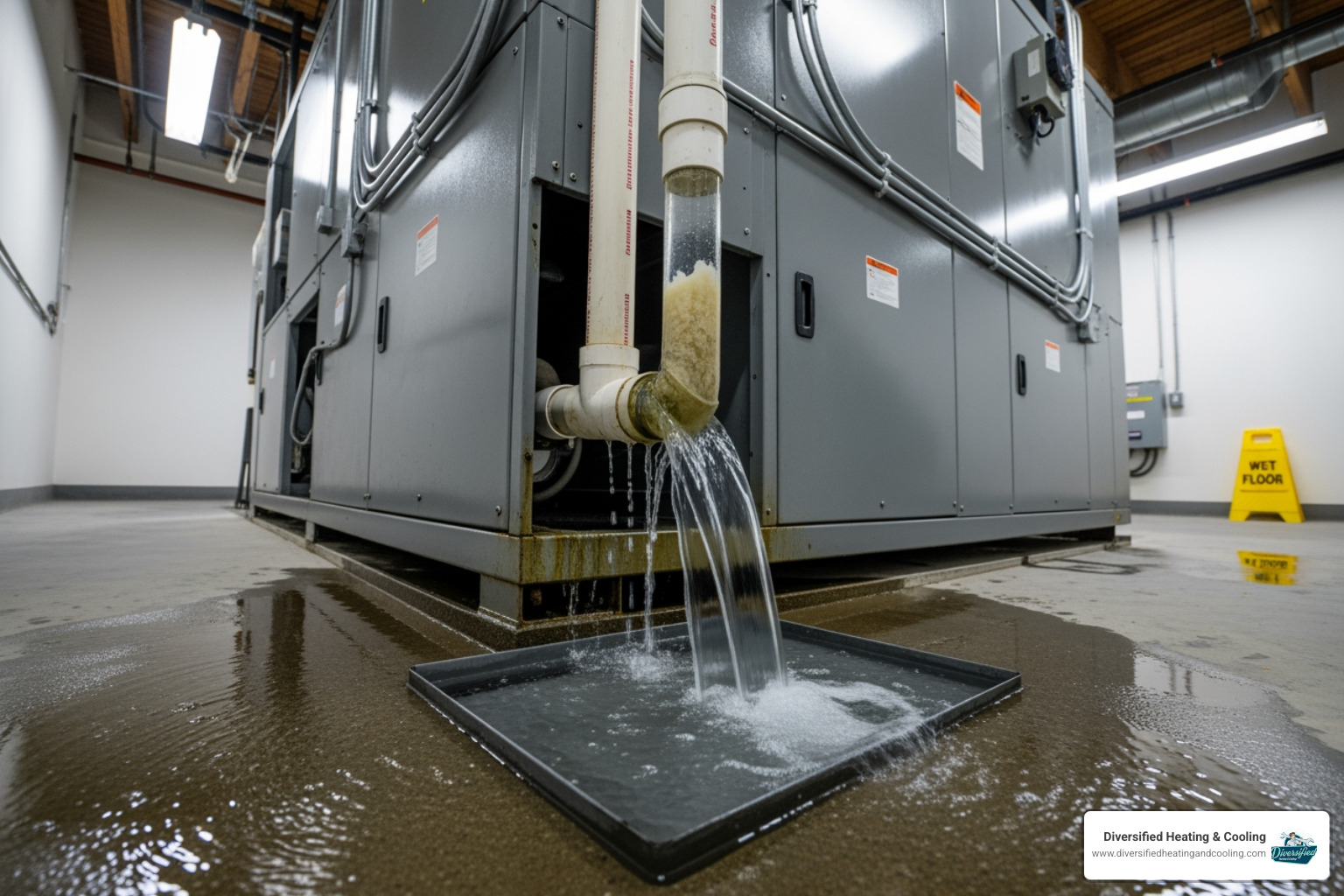
The Unique Challenges of the Indian Wells Climate
The Indian Wells desert climate creates a perfect storm for HVAC problems.
- Intense Desert Heat: Your units run almost constantly for months, fighting temperatures over 100°F. This extreme demand causes enormous stress and premature wear on all components, leading to failures and leaks.
- Extreme Temperature Swings: The daily shift from scorching heat to cooler nights causes materials to expand and contract. This cycle weakens seals, cracks drain pans, and loosens connections over time.
- Fine Dust: Pervasive desert dust is the enemy of HVAC systems. It clogs air filters quickly, coats coils to restrict airflow, and creates stubborn blockages in condensate lines. This is why we emphasize aggressive filter replacement schedules in our HVAC Services Yucca Valley CA.
Why Different Commercial Systems Have Unique Leak Risks
Not all commercial HVAC systems are the same, and each type has specific leak vulnerabilities.
Rooftop units, common in Indian Wells, are exposed to the full force of the desert elements. Their main leak risks are failed seals around roof penetrations (where the unit is mounted) and clogged condensate drainage. When a rooftop unit’s drain clogs, water pools on the roof, accelerating roof damage and creating new ways for water to enter the building.
Chiller systems, used in larger facilities, circulate massive amounts of water. A leak here isn’t a drip; it can be a flood. The primary risks involve failing water lines, pumps, and seals, making regular pipe inspections critical. Our Commercial Heating Repair Solutions cover these complex systems.
Water-cooled systems and cooling towers face constant threats from piping corrosion and pump failures. Poor water quality can cause pipes to corrode from the inside out. A common issue is a stuck float valve in a cooling tower, which can cause it to overflow continuously, wasting thousands of gallons of water and causing significant damage.
Spotting the Signs and Understanding the Damage
A leaking commercial HVAC system often gives subtle warnings before a crisis occurs. Catching these early signals can save you from a shutdown and costly repairs.
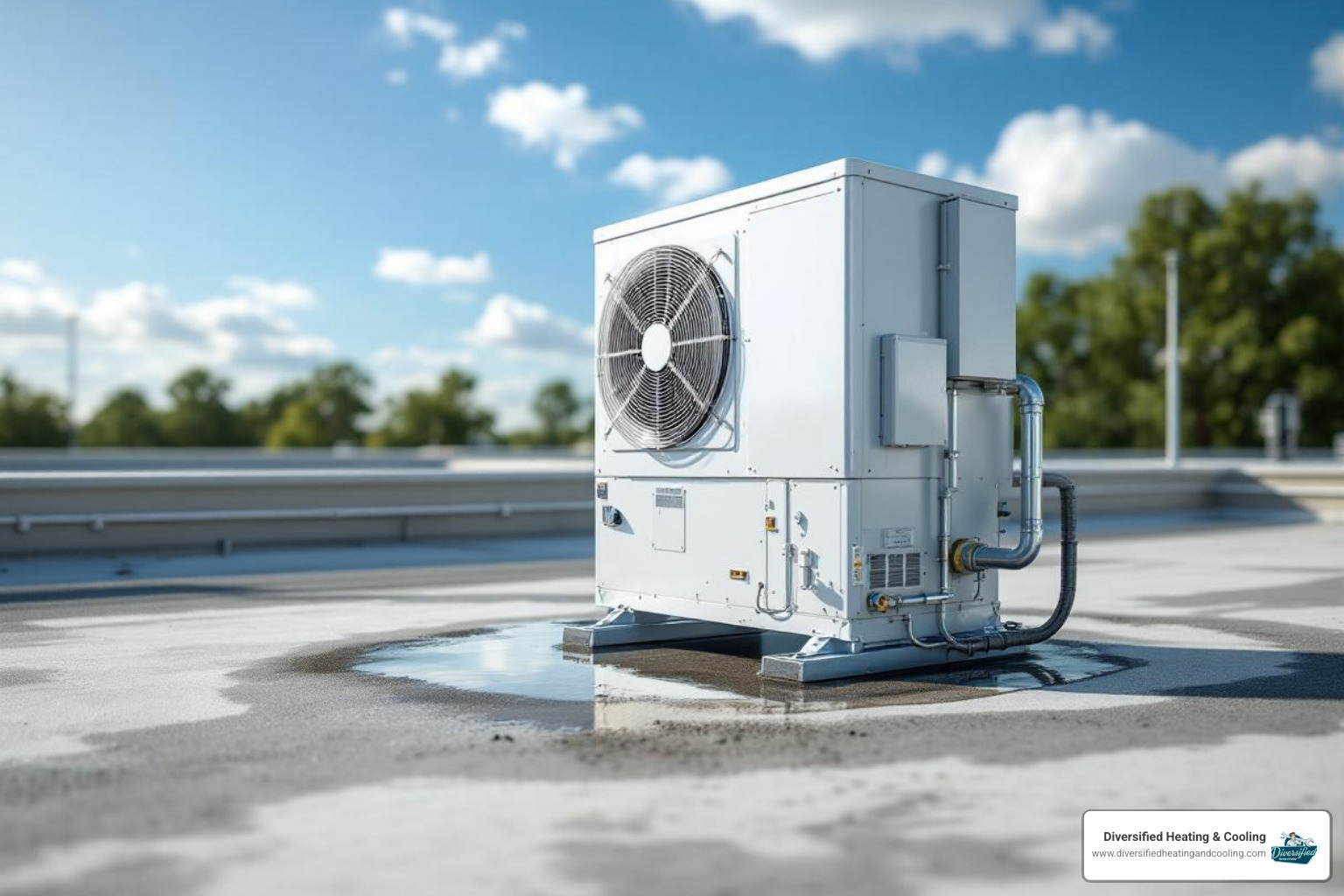
Signs of a commercial hvac leaking water in indian wells ca
- Water stains on ceilings or walls: Look for yellowish or brown discolorations below the HVAC unit or along beams. These spots will grow if the leak isn’t fixed.
- Puddles around indoor or outdoor units: While some condensation is normal, standing water that doesn’t evaporate is a clear red flag.
- Musty odors: A dank, earthy smell near vents or equipment rooms indicates moisture has allowed mold and mildew to grow.
- Visible mold or mildew: If you see mold on walls, ceilings, or the unit itself, you have an active moisture problem.
- High indoor humidity: If your space feels sticky despite the AC running, the system may be failing to remove moisture properly.
- Audible dripping sounds: Any dripping that isn’t from a known source like a sink could be your HVAC system.
- Low cooling output: A leak-related issue, like frozen coils or low refrigerant, can significantly reduce your system’s ability to cool.
- System short cycling: If the unit turns on and off frequently without finishing a cooling cycle, moisture may be affecting sensors or refrigerant levels may be off. For more on specific systems, see our guide on water leakage issues with evaporative AC.
The Cascade of Damage from Unchecked Leaks
Ignoring a commercial hvac leaking water in indian wells ca leads to a domino effect of costly damage.
- Structural damage: Water weakens building materials, causing wood to rot, drywall to crumble, and compromising your building’s integrity.
- Roof damage: For rooftop units, pooling water degrades roofing materials, leading to expensive roof repairs on top of HVAC fixes.
- Slip-and-fall risks: Puddles create serious safety hazards for employees and customers, opening your business to liability claims.
- Damaged inventory and equipment: Water can ruin products, short out electronics, and corrode machinery, resulting in direct financial losses.
- Business interruption: Major water damage may force you to close for repairs, leading to lost revenue and customers.
- Poor indoor air quality: Mold and mildew from leaks circulate through your HVAC system, spreading allergens that can cause health issues for everyone in the building.
- Higher utility bills: A leaking, inefficient system works harder and consumes more energy, increasing your operating costs. Our heating services for commercial properties help prevent these issues.
Your Guide to Preventing and Managing HVAC Water Leaks
Most commercial hvac leaking water in indian wells ca situations are preventable. A proactive approach to maintenance protects your business from the expense and disruption of water damage.
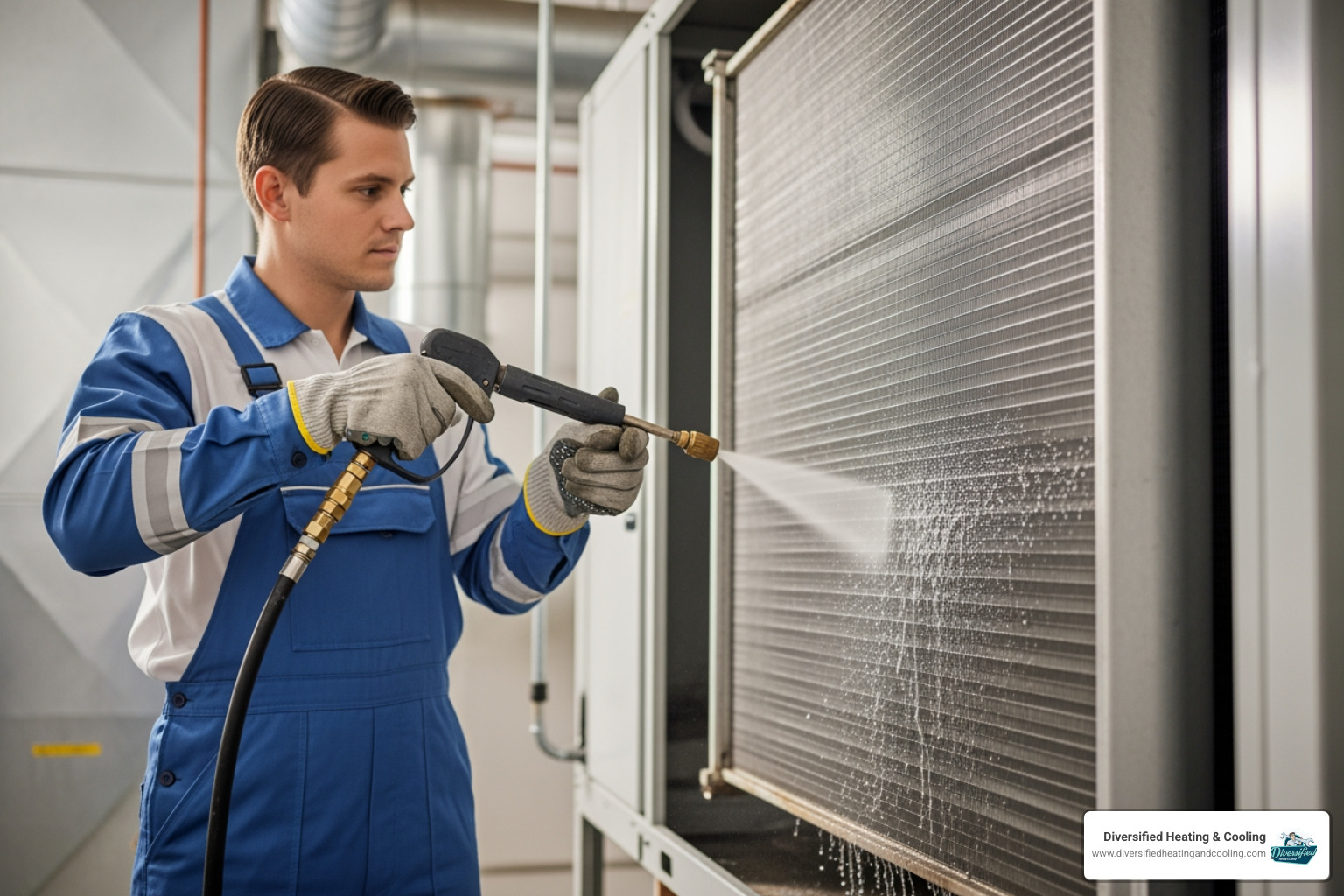
Preventing commercial hvac leaking water in indian wells ca with Maintenance
Consistency is the key to preventing leaks. Regular, professional maintenance catches small issues before they become disasters.
- Regularly change air filters: Clogged filters are a top cause of leaks. In dusty Indian Wells, restricted airflow leads to frozen coils and overflowing drain pans. Check filters monthly during peak season.
- Clean evaporator and condenser coils: Dirty coils can’t transfer heat effectively, leading to freezing or system strain. Professional cleaning restores efficiency.
- Clear condensate drain lines: Regular flushing prevents the algae and debris buildups that cause most overflows. A technician will ensure the line is clear and properly sloped.
- Inspect the drain pan: Technicians should check for cracks in plastic pans or rust in metal ones. Catching damage early prevents a guaranteed leak.
- Check refrigerant levels: Low refrigerant causes coils to freeze and overflow when they thaw. This is not a DIY task and requires a certified technician to check levels and repair any system leaks.
- Inspect connections and seals: A technician will tighten fittings and replace worn seals that can loosen over time due to vibration and temperature changes.
Our comprehensive HVAC services cover all these essentials. We recommend biannual tune-ups for Indian Wells properties—one before summer and one before winter.
When to Call a Professional for Your Commercial System
Commercial HVAC systems are complex and potentially dangerous. Know when to call for professional help.
- Large or persistent leaks: A steady stream or pooling water signals a serious failure. Call immediately to prevent widespread damage.
- Signs of electrical issues: If you see flickering lights, trip breakers, or smell burning near the unit, shut off the power and call a professional. Water and electricity are a dangerous mix.
- Suspected refrigerant leaks: Hissing sounds or a lack of cooling could mean a refrigerant leak, which only licensed technicians can safely handle.
- Lack of cooling or heating: If basic checks don’t solve the problem, a deeper issue like a component failure or hidden leak is likely the cause.
- General safety concerns: If you hear strange noises, smell unusual odors, or feel something isn’t right, it’s always safest to call for a professional diagnosis.
Our team at Diversified Heating & Cooling has seen it all. We respond quickly to diagnose and fix problems right the first time, minimizing downtime for your business.
Frequently Asked Questions about Commercial HVAC Leaks
How are commercial HVAC leaks different from residential ones?
Commercial HVAC leaks are a bigger problem than residential ones for several key reasons:
- Scale and Complexity: Commercial systems are massive and intricate. A single leak can affect a huge area, and finding the source is more difficult.
- Rooftop Location: Most commercial units are on roofs, exposed to the elements. A leak can damage the HVAC system and the roof itself, creating a much larger problem.
- Drainage Systems: Commercial systems often use condensate pumps and complex drain networks. A failure in any part of this system can cause a major backup.
- Impact on Operations: A leak in a home is an inconvenience. A leak in a business can shut down operations, leading to lost revenue, damaged inventory, and liability risks.
How often should a commercial HVAC system in Indian Wells be inspected to prevent leaks?
For commercial systems in Indian Wells, biannual tune-ups are the absolute minimum. We recommend:
- A pre-summer check (April/May) to prepare the cooling system for the intense heat. This includes clearing condensate lines and checking all critical components.
- A pre-winter check (fall) to address any wear and tear from the summer and ensure the heating system is ready.
Properties in very dusty areas or with older systems may benefit from quarterly inspections. Proactive maintenance is far less expensive than emergency repairs and business downtime.
Can a leaking HVAC unit affect my building’s indoor air quality?
Yes, absolutely. A leak from a commercial hvac leaking water in indian wells ca creates damp environments perfect for mold and mildew growth. This can happen within 24-48 hours. When the HVAC system runs, it circulates these contaminants—including mold spores and bacteria—throughout your entire building. This leads to:
- Musty odors that create an unwelcoming environment.
- Spread of allergens that can trigger respiratory issues, headaches, and allergic reactions in employees and customers.
Fixing leaks promptly is crucial for protecting not just your property, but also the health of everyone inside it.
Protect Your Indian Wells Property from HVAC Water Damage
A small drip today can become a major flood tomorrow. That’s the reality of commercial hvac leaking water in indian wells ca, and why immediate action is crucial for your business.
The relentless Indian Wells climate puts tremendous stress on your HVAC equipment. The combination of extreme heat, temperature swings, and fine dust causes components to wear out faster and drain lines to clog, making leaks a constant threat.
Proactive care is essential. Regular maintenance from a trusted professional catches problems before they lead to water-stained ceilings, ruined inventory, or a complete business shutdown. It’s an investment in your property, your air quality, and your operational continuity.
At Diversified Heating & Cooling, we are a family-oriented business that understands the unique challenges of desert HVAC systems. Our honest, reliable team knows what it takes to keep commercial units in Indian Wells running without issue. We don’t just fix leaks; we prevent them with comprehensive maintenance custom to your system’s needs.
Your business deserves to run smoothly and safely. Don’t wait for a minor leak to become a major crisis. A maintenance call today can save you thousands in future repairs and lost business.
Ready to protect your investment? Reach out to us at Diversified Heating & Cooling for expert leak detection, prevention, and repair services. We’re here to keep your business cool, dry, and operating at its best.