

Benefits of whole-home humidifiers in dry winter air
Anathea Maxwell
Dry winter air can make a home feel less comfortable than the thermostat suggests. It can contribute to annoying static electricity, leave wood furnishings looking stressed, and make heated rooms feel cooler than they should. A properly selected whole-home humidifier can add controlled moisture to the air your HVAC system circulates, helping Diversified HVAC customers create a more balanced indoor environment during the heating season.
Unlike portable units that treat one room at a time, a whole-home humidifier is integrated with the heating system to deliver consistent humidity throughout much of the home. The goal is not to make the air damp; it is to maintain a comfortable, manageable level of indoor moisture.
Why Winter Air Becomes So Dry
Cold outdoor air naturally holds less moisture than warm air. When that air enters a home through normal ventilation and small gaps around doors, windows, and other openings, then is heated indoors, its relative humidity can drop significantly.
Running a furnace regularly can make this change more noticeable. The heating system does not create dry air on its own, but warming already low-moisture air lowers its relative humidity. That is why a home may feel dry even while the thermostat is set at a comfortable temperature.
How Low Humidity Affects Everyday Comfort
Indoor humidity influences how comfortable the air feels on your skin. In dry conditions, moisture evaporates more readily from the skin, which can make a room feel cooler than its temperature reading. Homeowners may respond by raising the thermostat, even though the issue is partly a lack of moisture rather than a lack of heat.
Balanced humidity can help a home feel more comfortable at a given temperature. It is not a replacement for dependable heating, insulation, or weatherization, but it can be an important part of an overall winter comfort strategy.
Static Electricity and Dry Indoor Air
Static shocks are one of the most familiar signs of dry indoor air. When humidity is low, electrical charges are less likely to dissipate naturally. Walking across carpet, removing a sweater, or touching a metal doorknob can become an unexpectedly shocking experience.
Maintaining appropriate humidity may reduce the conditions that allow static charges to build up. While it will not eliminate every static shock, it can make the indoor environment feel less prone to those frequent winter jolts.
What Dry Air Can Do to Wood Furnishings
Wood responds to changes in surrounding moisture. When indoor air becomes very dry, wood flooring, trim, cabinets, furniture, and musical instruments may lose moisture and contract. Homeowners may notice small gaps in flooring, creaks, changes around joints, or a generally drier appearance in wood surfaces.
A whole-home humidifier cannot correct existing damage, and it should not be used to push humidity too high. However, stable, properly controlled indoor humidity can help reduce dramatic swings that place added stress on wood materials. Diversified HVAC can help homeowners consider humidity as part of a broader approach to protecting indoor finishes and comfort.
How a Whole-Home Humidifier Works
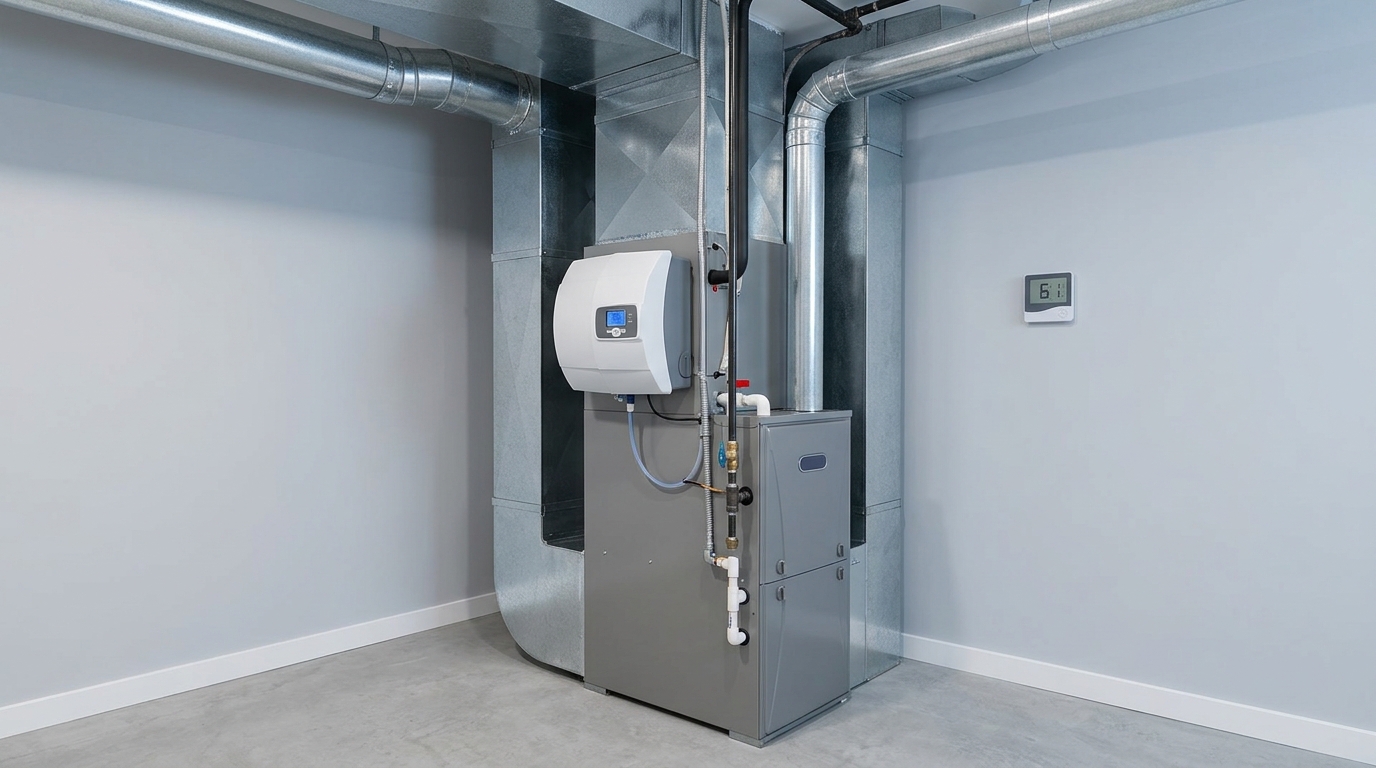
A whole-home humidifier is typically installed alongside a forced-air heating and cooling system. Depending on the model, it may use a water panel, evaporative media, or another method to introduce moisture into the air moving through the ductwork. The furnace blower then distributes that conditioned air through the home.
The system is controlled by a humidistat, which measures indoor relative humidity and signals the humidifier when moisture is needed. Modern controls can be set to target a humidity range rather than run continuously. Some systems can also adjust operation based on outdoor temperatures to help avoid excess condensation on windows and other cool surfaces.
Who May Benefit From a Whole-Home Humidifier
Homeowners who consistently notice dry air during the heating season may be good candidates for a whole-home solution. Common concerns include frequent static electricity, dry-feeling rooms, wood floor gaps, shrinking wood furniture, and a need to turn up the thermostat simply to feel comfortable.
Whole-home humidifiers can be especially practical for households that are tired of refilling and cleaning multiple portable units. Because they work with the HVAC system, they can provide more even coverage without adding a separate appliance to each room. The right option depends on the home’s size, ductwork, heating equipment, insulation, air leakage, and daily occupancy patterns.
Basic Whole-Home Humidifier Maintenance
Like any HVAC accessory, a humidifier needs routine attention to operate efficiently and cleanly. Basic maintenance often includes changing the water panel or evaporative pad as recommended by the manufacturer, inspecting the water line and drain, checking the humidistat setting, and cleaning mineral buildup where applicable.
Hard water can increase mineral deposits, so maintenance needs can vary from one home to another. A professional HVAC visit is also a good time to inspect the unit, confirm that it is operating correctly, and address components that may be worn or clogged. Diversified HVAC can explain the maintenance expectations for the specific humidifier model being considered or already installed.
Why Sizing and Humidity Control Matter
More humidity is not always better. Excess indoor moisture can lead to window condensation, moisture on cold surfaces, and other concerns that homeowners want to avoid. On the other hand, a unit that is too small may not make a meaningful difference in a larger or leakier home.
Proper sizing takes more than square footage into account. A qualified HVAC professional should evaluate the home’s layout, heating system capacity, ductwork, insulation, air infiltration, and the level of humidity control desired. The humidifier also needs to be installed and configured so it works in step with the HVAC system rather than independently of it.
Accurate control is just as important as equipment selection. Outdoor conditions change throughout winter, and a sensible humidity target may need adjustment as temperatures fall. Diversified HVAC can help homeowners choose a setup that supports comfort while keeping moisture levels within an appropriate range for the home.
FAQ
What indoor humidity level should a home have in winter?
The ideal setting varies based on outdoor temperatures, window performance, insulation, and the home’s overall construction. Many homeowners aim for a moderate range, then reduce the setting if they see condensation on windows or other cold surfaces. A Diversified HVAC technician can help identify a practical target for the home.
Will a whole-home humidifier make every room equally comfortable?
It can improve consistency throughout a ducted home, but room-by-room results can still be affected by airflow, insulation, sun exposure, and duct design. HVAC system performance should be evaluated as a whole when comfort differs significantly between rooms.
Do whole-home humidifiers require a lot of upkeep?
They require regular but manageable maintenance. Most systems need periodic replacement of a water panel or pad, along with cleaning and inspection. Following the manufacturer’s schedule helps support dependable operation.
Can a humidifier be added to an existing furnace?
In many cases, yes. Compatibility depends on the heating equipment, ductwork, available water and drain connections, and the home’s needs. A professional evaluation is the best way to determine whether installation is feasible.
Can too much humidity cause problems?
Yes. Over-humidifying can contribute to condensation and unwanted moisture on cool surfaces. That is why proper sizing, installation, and humidistat control are essential.
If dry winter air is affecting your comfort, causing static shocks, or creating concerns for wood furnishings, ask Diversified HVAC whether a whole-home humidifier is a good fit for your home.